
The stablecoin liquidity shift in 2026
The stablecoin market has moved beyond simple utility and is now the primary plumbing for decentralized finance. In 2026, the focus has shifted from mere adoption to efficiency, with institutional players demanding the low-slippage trading environments that only specialized Automated Market Makers (AMMs) can provide. This evolution marks a departure from the generic liquidity pools of the early DeFi era, where stablecoin swaps often suffered from significant price impact due to standard bonding curves.
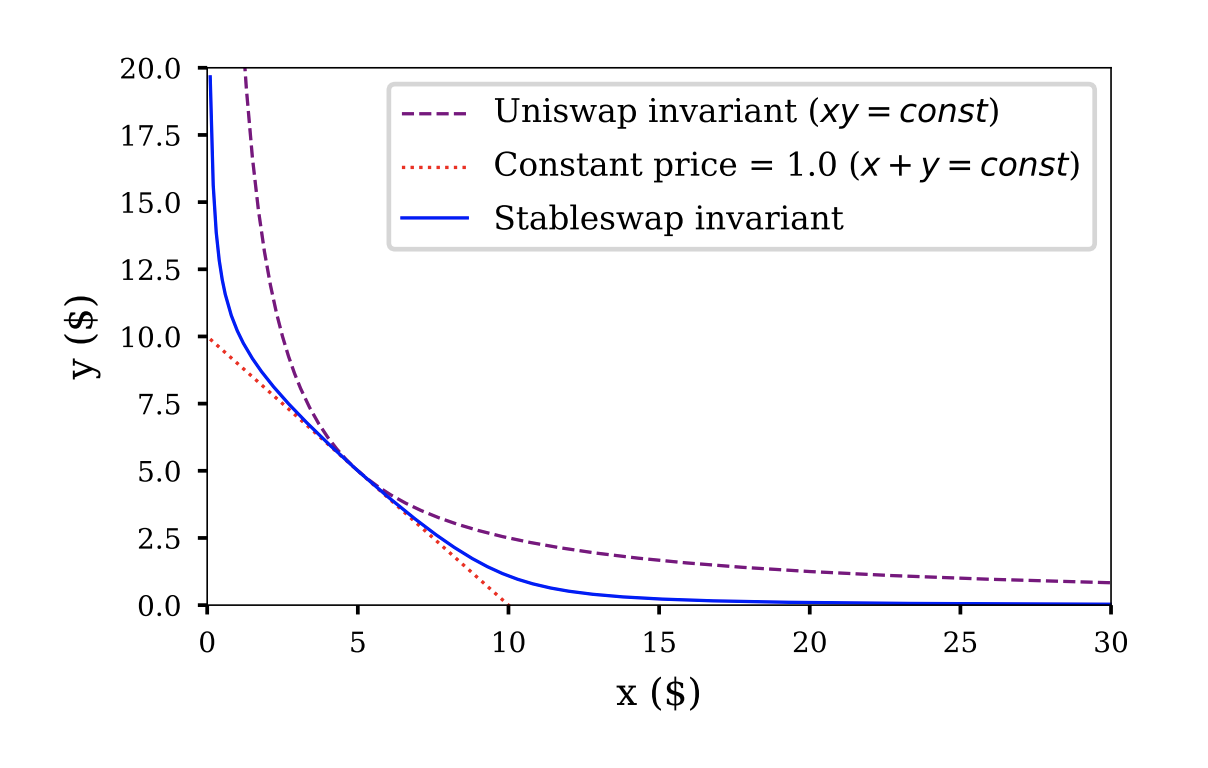
StableSwap protocols have emerged as the technical backbone for this efficiency. By utilizing invariant curves that flatten near the peg, these protocols minimize slippage for large trades, making them the preferred choice for high-volume trading and yield farming. The distinction is clear: while traditional AMMs treat all tokens equally, StableSwap algorithms are optimized specifically for assets that share a common value anchor, typically the US dollar.
Leading platforms like Curve and PancakeSwap have doubled down on this infrastructure. Curve’s Concentrated Liquidity Stableswap pools allow liquidity providers to offer capital within tighter bands, deepening the order book and reducing costs for traders. Similarly, PancakeSwap has integrated advanced StableSwap mechanisms to compete in the high-yield sector, attracting capital that seeks to maximize returns while minimizing the risk of impermanent loss associated with volatile pairs.
This shift is not just technical; it reflects a broader market maturity. As stablecoin usage grows, so does the demand for sophisticated financial instruments built on top of them. StableSwap is no longer a niche feature but a fundamental requirement for any protocol serious about capturing the 2026 stablecoin liquidity wave.
Inside Curve StableSwapNG architecture
The original StableSwap invariant revolutionized decentralized trading by solving the slippage problem for stablecoins. By blending the constant product formula with a stable peg curve, Curve minimized price impact for assets like USDC and DAI. However, the legacy implementation was rigid, locked into two-coin pairs, and increasingly inefficient as gas costs rose and multi-asset strategies became standard.
StableSwapNG represents a complete architectural overhaul designed for the 2026 DeFi landscape. It introduces a more efficient mathematical core that reduces computational overhead, directly lowering gas fees for traders. This optimization is critical for high-frequency stablecoin rotations, where even minor inefficiencies can erode yields.
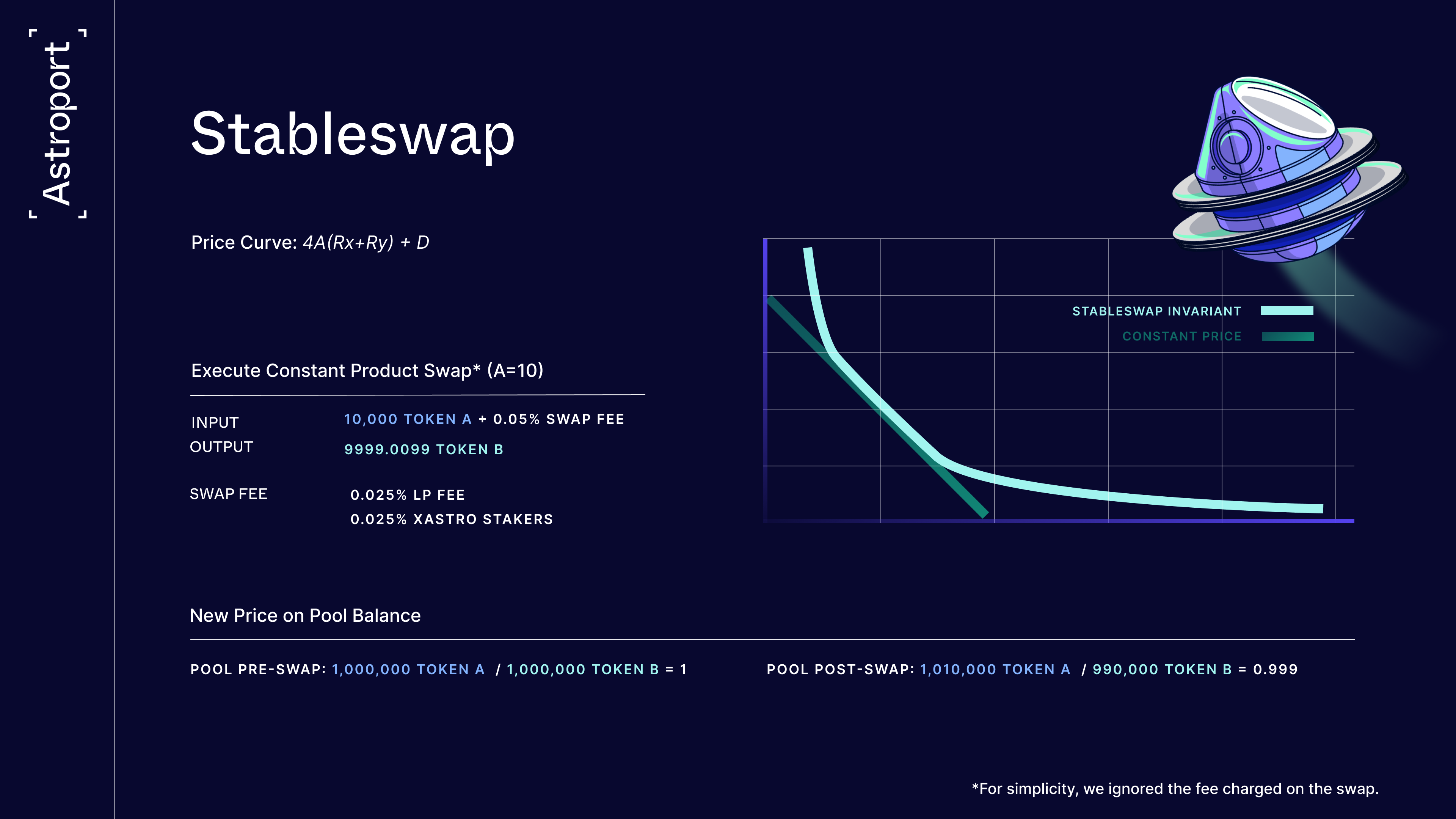
The most significant leap is multi-coin support. While legacy pools were limited to two assets, StableSwapNG plain pools support up to eight coins. This expansion drastically reduces liquidity fragmentation. Instead of splitting capital across dozens of binary pairs, protocols can aggregate liquidity into a single, deep pool. This structural change mirrors the efficiency gains seen in newer AMMs like PancakeSwap’s multi-pool systems, but with Curve’s signature low slippage.
Metapools have also been refined to support seamless integration with external protocols. By allowing a base pool to act as a reserve for a derivative token, StableSwapNG maintains the low-slippage benefits of stablecoin trading while expanding the universe of tradeable assets. This architecture is not just an incremental update; it is a fundamental shift toward scalable, multi-asset stable liquidity.
How Zero-Loss Liquidity Protects Your Principal
The term "zero-loss" in stablecoin liquidity pools doesn't mean you can't lose money; it means your principal remains intact relative to the peg. In traditional Automated Market Makers (AMMs) like Uniswap v2, providing liquidity to volatile pairs exposes you to impermanent loss. As the price of one asset diverges from the other, the AMM automatically sells the appreciating asset and buys the depreciating one. If the price gap widens significantly, you end up with more of the losing asset than if you had simply held both tokens in your wallet.
StableSwap algorithms, pioneered by Curve Finance, solve this by introducing a "stable invariant." This mathematical adjustment keeps the pool's price tightly anchored to the 1:1 peg. When you provide liquidity to a stablecoin pair, the pool's rebalancing mechanism is so efficient that the divergence is negligible. You are effectively trading in a friction-free zone where the risk of impermanent loss is mathematically suppressed to near zero.
This protection is why protocols like PancakeSwap and Curve have become the backbone of DeFi yield farming. Instead of betting on price direction, LPs provide capital for stablecoin swaps, earning fees from high-volume trading without fearing their principal value will erode due to market volatility. The yield comes from the transaction fees, not from asset appreciation, making it a lower-risk, steady-income strategy for conservative DeFi participants.
DeFi yield strategies for 2026
The 2026 DeFi landscape rewards capital that moves with precision. StableSwap protocols have evolved from simple stablecoin swaps into sophisticated yield engines, leveraging invariant curve slippage functions to minimize losses during high-volume trades. For liquidity providers, this means higher efficiency and lower impermanent loss compared to traditional Automated Market Makers (AMMs).
Arbitrage opportunities remain a core driver of yield. As price discrepancies emerge across exchanges, arbitrageurs profit from the spread while simultaneously stabilizing the peg within the pool. This mechanism ensures that stablecoins trade close to their target value, attracting institutional capital that requires predictable returns. The constant rebalancing of these pools creates a continuous flow of trading fees, which are distributed directly to liquidity providers.
Cross-chain stable swaps have further expanded these opportunities. Liquidity providers can now deploy capital across multiple blockchains, capturing yield from diverse ecosystems without sacrificing stability. For example, PancakeSwap’s StableSwap feature allows users to trade stable pairs with significantly reduced slippage, making it a preferred choice for large-volume transactions. This cross-chain liquidity aggregation maximizes capital efficiency, ensuring that every dollar deployed works harder.
The key to success in 2026 lies in selecting protocols that prioritize transparency and security. Users should look for platforms with audited smart contracts and real-time fee distribution mechanisms. By focusing on these technical fundamentals, investors can plan around the evolving DeFi yields with confidence.
Where to trade stablecoins in 2026
The landscape for stablecoin swaps has consolidated around two primary models: the established Curve ecosystem and the high-volume PancakeSwap StableSwap. Curve remains the backbone for institutional-grade stability, offering deep liquidity for major pairs like USDC/USDT. Its constant product invariant minimizes slippage on large orders, making it the default choice for treasury management and arbitrage bots.
PancakeSwap has integrated StableSwap mechanics to capture retail volume and cross-chain liquidity. By applying curve-based pricing to stable pairs, it reduces the impermanent loss friction that plagues traditional AMMs. This allows traders to exit positions with minimal price impact, particularly on BNB Chain and other EVM-compatible networks where retail activity is high.
Beyond the protocols themselves, 2026 is seeing a surge in industry events focused on stablecoin infrastructure. The Stablecoin Conference in Mexico City (June) and the Stable Summit in Singapore (October) are shaping the regulatory and technical standards that these platforms will need to adhere to. These gatherings signal a shift from speculative growth to compliance-driven utility, affecting how exchanges list and support stablecoin pairs.
Common questions about StableSwap
How does StableSwapNG differ from the original Curve algorithm?
StableSwapNG replaces the legacy invariant with a more flexible mathematical model that adapts to varying asset correlations. While the original Curve StableSwap focused heavily on pegged assets like USDC and USDT, the new architecture supports a wider range of stablecoins without incurring the slippage penalties that used to plague cross-asset swaps. This evolution allows for greater capital efficiency in the 2026 DeFi landscape.
Where do the yields in StableSwap pools actually come from?
Yields are primarily generated from trading fees and protocol incentives rather than external lending protocols. In 2026, platforms like PancakeSwap have integrated these pools directly into their yield aggregators, allowing users to earn from swap volume while providing liquidity. The stability of these yields relies on high transaction volume rather than volatile token price appreciation.
Is there a risk of depegging in these concentrated liquidity pools?
The risk is mitigated by the algorithm's design, which penalizes large deviations from the peg more aggressively than standard AMMs. However, during extreme market stress, stablecoins can still decouple. Liquidity providers should monitor the underlying asset's reserve ratios closely, as the invariant assumes a stable relationship between paired tokens.
No comments yet. Be the first to share your thoughts!