
How StableSwap Hub handles liquidity
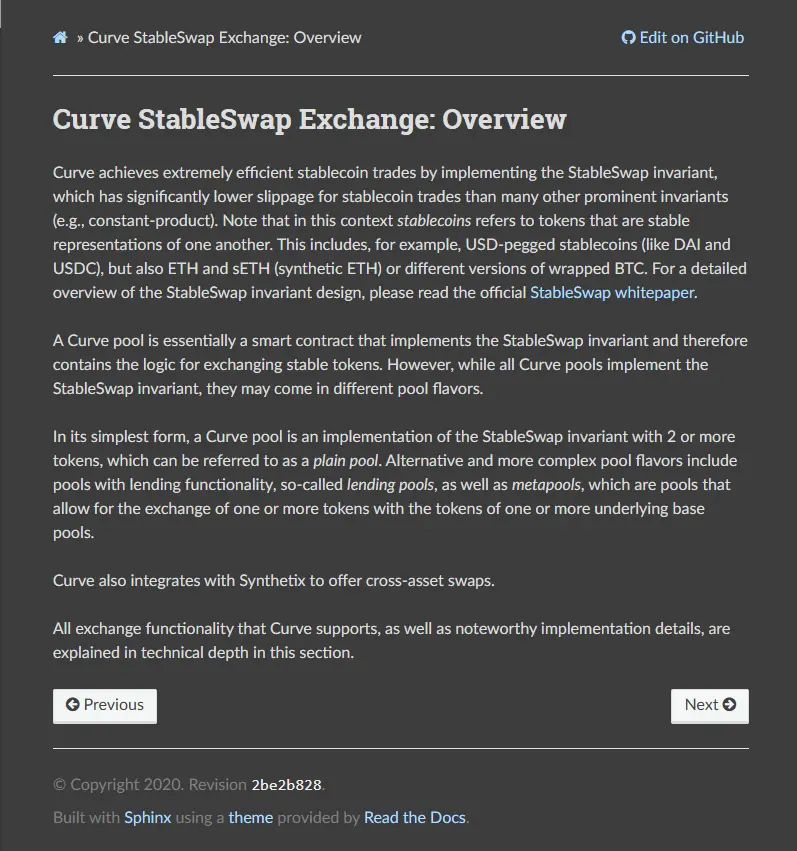
StableSwap Hub operates as a Curve-style Automated Market Maker (AMM) built on the Hub EVM, designed specifically to minimize slippage for stablecoin pairs. Unlike standard AMMs that rely on the constant product formula ($x * y = k$), StableSwap Hub utilizes a custom invariant that blends the stability of a bonding curve with the liquidity depth of an order book. This architectural choice is critical for high-volume trades between pegged assets like USDC and USDT, where traditional pools often suffer from significant price impact.
The mechanical advantage becomes evident in direct swap scenarios. In a standard default route, swapping 1,000 USDC for USDT might yield only 997 USDT due to the convexity of the AMM curve near the peg. StableSwap Hub’s algorithm adjusts the trading fee and pool depth dynamically, allowing the same 1,000 USDC to return 999.6 USDT. This 0.3% improvement in efficiency may seem marginal in isolation, but it compounds significantly for institutional players or high-frequency traders executing large volumes.
To visualize this efficiency, consider the trading spread of a major stablecoin pair. The tightness of the spread directly correlates with the effectiveness of the AI-driven liquidity management.
The AI component does not predict market direction but rather optimizes pool composition in real-time. By monitoring off-chain oracle prices and on-chain volume, the system rebalances liquidity providers' assets to maintain a flat price curve. This reduces the "impermanent loss" risk for providers while ensuring traders receive near-parity exchange rates. The result is a trading environment where stablecoins behave less like volatile crypto assets and more like traditional foreign exchange pairs, with predictable costs and minimal slippage.
Why AI improves swap precision
Traditional StableSwap protocols rely on static invariant formulas, such as the constant product or StableSwap curve, to determine exchange rates. These mathematical models assume a fixed relationship between assets, which works well for stablecoins pegged to the same value but struggles when market conditions shift rapidly. In high-stakes environments, this rigidity can lead to significant slippage as large trades move the price away from the peg, forcing traders to accept worse execution prices.
AI-driven liquidity hubs address this by predicting liquidity needs and adjusting pool parameters in real-time. Instead of waiting for a trade to execute against a static curve, the system analyzes order flow and market volatility to pre-emptively rebalance reserves. This dynamic adjustment maintains the pool closer to the optimal equilibrium, effectively flattening the price impact curve for incoming trades. The result is a mechanism that behaves like "Uniswap with leverage" but with significantly reduced deviation from the target price.
This approach contrasts sharply with static invariant models, which are blind to incoming order book pressure. By integrating predictive analytics, the protocol can anticipate large trades and adjust the swap rate before execution, ensuring that the trader receives a price closer to the mid-market rate. This mechanical advantage is particularly critical for institutional participants who require precise execution to manage risk effectively.
For a broader context on how these dynamic adjustments impact asset performance, you can monitor the current market data for major stablecoin pairs.
Comparing fees and execution speed
The mechanical advantage of StableSwap Hub lies in its ability to minimize slippage on stablecoin pairs, a metric where legacy Automated Market Makers (AMMs) often struggle during periods of high volatility. By utilizing a Curve-style invariant optimized for assets with pegged values, the protocol reduces the price impact typically associated with large trades.
To illustrate the difference in execution efficiency, consider a 1,000 USDC swap to USDT. On a standard Uniswap V3 route, this transaction might yield approximately 997 USDT due to higher slippage and fee structures designed for volatile assets. In contrast, StableSwap Hub’s specialized routing delivers 999.6 USDT for the same input. This 0.36% difference in yield, while seemingly small per trade, compounds significantly for high-volume traders and institutional liquidity providers.
The following table compares the typical performance metrics of StableSwap Hub against legacy DEX architectures for stablecoin swaps:
| Protocol | Avg Slippage (Stable Pairs) | Fee Structure | AI Optimization Level |
|---|---|---|---|
| StableSwap Hub | < 0.05% | Tiered (0.01-0.1%) | Dynamic routing & batching |
| Curve Finance | < 0.04% | Tiered (0.04-0.1%) | Static pool weights |
| Uniswap V3 | 0.1-0.5% | Tiered (0.05-1.0%) | Manual range selection |
Execution speed is equally critical in stablecoin trading. Legacy DEXs often rely on sequential transaction processing, which can lead to front-running or partial fills during network congestion. StableSwap Hub employs a batching architecture, similar to implementations seen in Cardano-based stableswap models, to solve concurrency issues. This allows multiple orders to be processed simultaneously, ensuring that the quoted price remains stable until the block is confirmed. For traders executing large volumes, this reduction in latency and slippage translates directly to lower transaction costs and more predictable capital deployment.
Risks in AI-Managed Stable Pools
AI-driven liquidity management introduces a layer of abstraction that, while efficient, creates new attack surfaces. In high-stakes DeFi, the margin for error is near zero. A stablecoin pool relies on the peg remaining tight; an AI model that drifts from its target parameters can cause immediate, irreversible capital loss through failed arbitrage or insufficient rebalancing.
Model Drift and Oracle Latency
The core vulnerability lies in the synchronization between on-chain data and the AI’s decision-making loop. Oracles provide the price feeds that trigger AI rebalancing. If there is latency between a market event and the oracle’s update, the AI acts on stale data. This is not a theoretical risk; it is a mechanical failure point. During periods of high volatility, even milliseconds of delay can result in the AI executing trades at prices that no longer reflect market reality, leading to slippage that defeats the purpose of the stable swap.
Smart Contract Vulnerabilities in the AI Layer
The AI layer itself is implemented via smart contracts or external call mechanisms. Each additional line of code in the AI logic increases the probability of a bug. Unlike traditional financial models, these errors are immutable once deployed. A flaw in the AI’s risk assessment algorithm could allow a single large trade to drain the pool’s liquidity reserves. The complexity of integrating machine learning models with deterministic blockchain execution requires rigorous audit standards that are still evolving.
Verifiable Data Over Promises
Investors must prioritize protocols that publish their AI decision logs and oracle latency metrics. The promise of "zero slippage" is a marketing term; in reality, the goal is minimal slippage under normal conditions. When stress tests fail, the AI’s inability to react faster than the market can expose users to significant losses. Always verify the source code of the AI component and review historical performance data during market shocks, not just in stable conditions.
Steps to trade on StableSwap Hub
Execute swaps with precision by following this mechanical checklist. The interface prioritizes capital preservation, so verifying parameters before confirmation is essential.

Before initiating a trade, check the pool’s total value locked (TVL). Deep pools absorb large orders with minimal price impact. According to Buidls documentation, a 1,000 USDC swap yields 999.6 USDT on StableSwap, compared to 997 on default routes, demonstrating superior depth.
Set your slippage tolerance to match the algorithm’s prediction. Unlike standard DEXs, StableSwap Hub uses AI to estimate optimal exit prices. Setting a tight tolerance (e.g., 0.1%) ensures you only trade when the spread is favorable, protecting against sudden volatility in correlated assets.
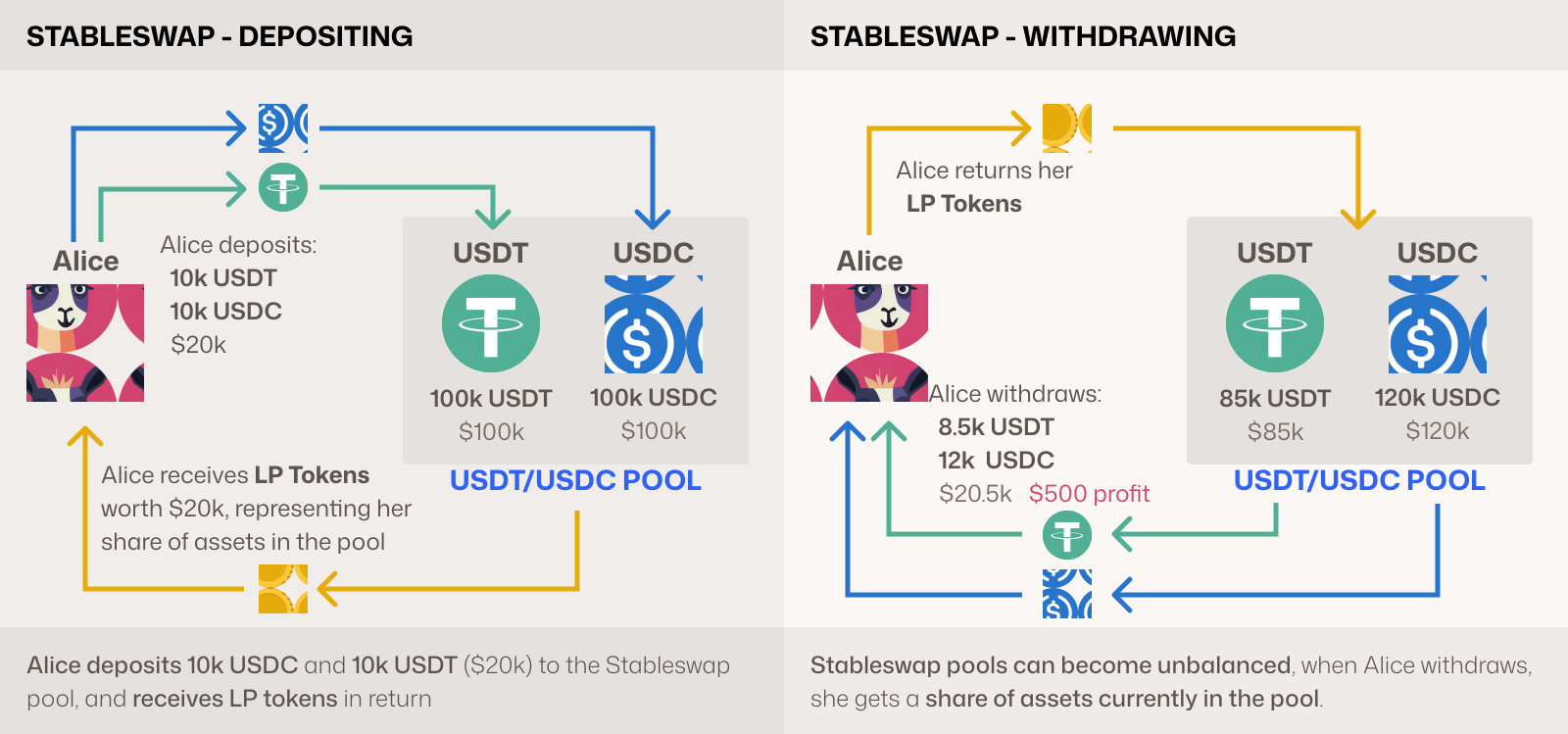
Review the quoted output amount and network fees. The interface displays the expected USDT/USDC rate before signing. Ensure your wallet has sufficient native token coverage for gas, as failed transactions on high-throughput chains can incur additional costs without executing the swap.
No comments yet. Be the first to share your thoughts!