
How stableswap pools reduce slippage
Stableswap automated market makers (AMMs) like Curve solve the primary weakness of standard AMMs: the high cost of swapping assets with similar values. In a traditional constant product model, trading large volumes of nearly identical tokens causes significant price deviation, known as slippage. This makes standard pools inefficient for stablecoin pairs like USDC and USDT, where traders expect a near 1:1 exchange rate regardless of trade size.
Stableswap pools use a weighted combination of constant product and constant sum formulas to keep prices pegged near $1.00 even during large volume trades. When assets are close to parity, the formula behaves like a constant sum model, allowing massive swaps with minimal price impact. As the ratio deviates, it gradually shifts toward the constant product model to protect liquidity providers. This mechanism ensures that low slippage swaps remain viable even as market conditions evolve in 2026.
Callouts
This efficiency is the foundation for 2026 yield strategies. Protocols like the Curve 3pool (USDC, USDT, DAI) rely on this low-slippage environment to offer deep liquidity for yield optimization. Traders can enter and exit positions without eroding their capital through trading fees, making stableswap pools the preferred venue for high-volume stablecoin management.
Execute low slippage swaps efficiently
Executing a stableswap transaction requires precision. Unlike standard automated market makers (AMMs) that suffer from high slippage on volatile assets, stableswap protocols like Curve Finance or Balancer are engineered to keep prices tight when trading pegged assets like USDC, USDT, or DAI. In 2026, with regulatory scrutiny increasing on yield-bearing wrappers, the focus shifts to direct, low-fee swaps within mature, audited pools.
The goal is to minimize the price impact and transaction fees while securing the yield opportunity. This process involves selecting the right pool, setting optimal slippage tolerances, and verifying the transaction details before signing. Following this workflow ensures you avoid unnecessary losses and maintain the integrity of your yield optimization strategy.
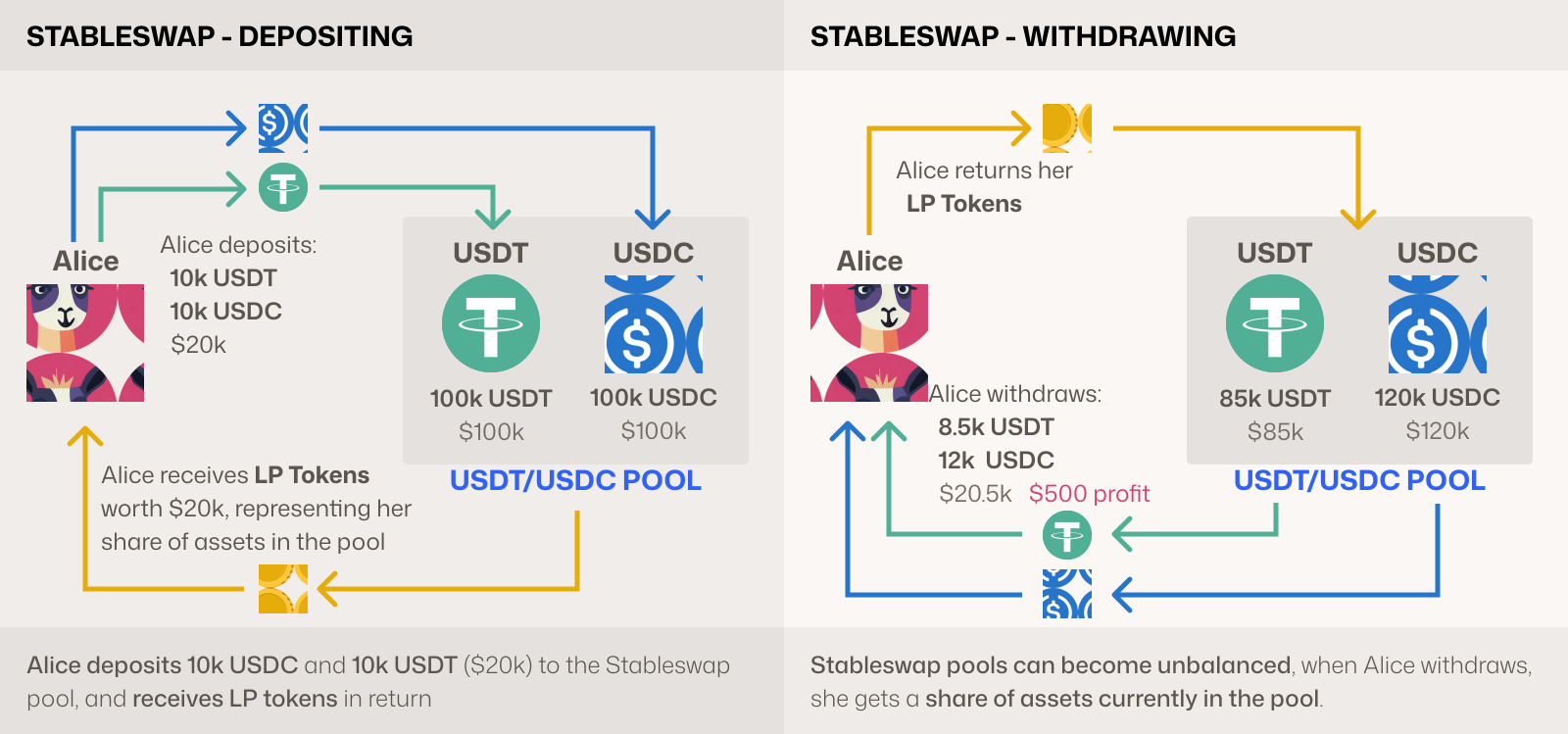
Navigate to your preferred stableswap interface and locate the pool that matches your assets. For example, if swapping between USDC and USDT, look for the "3pool" or "USDC/USDT" pool. These pools aggregate high-liquidity stablecoins, ensuring the tightest spreads. Avoid pools with lower total value locked (TVL), as they may introduce hidden slippage despite the assets being pegged.
Set your slippage tolerance to a low percentage, typically between 0.05% and 0.1%. Stablecoins rarely deviate significantly from their peg, so high slippage settings only expose you to front-running or poor pricing. Ensure the "fee" or "priority fee" is set to standard levels unless the network is congested. In 2026, many interfaces auto-calibrate these settings based on real-time gas prices and pool volatility.
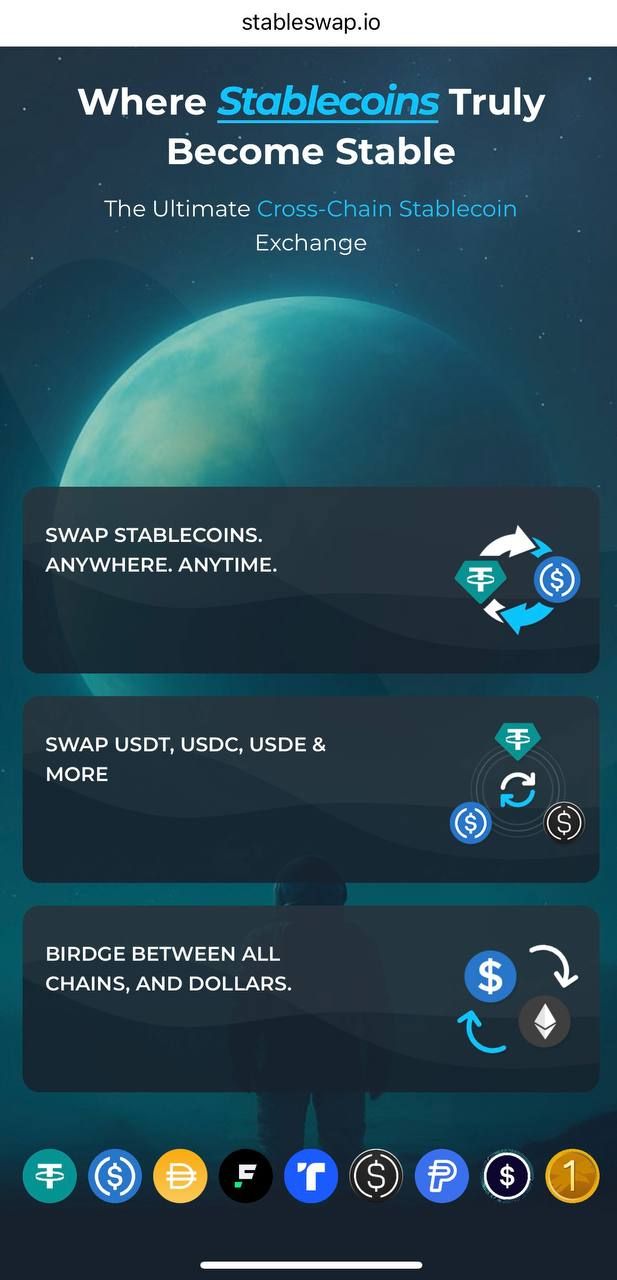
Before confirming, inspect the "price impact" indicator. For low slippage swaps, this should remain below 0.1%. If the impact is higher, the pool may be shallow, or you may be crossing a fee tier. Check the route to ensure the swap is direct or uses the most efficient intermediate step. Avoid complex multi-hop routes for simple stable-to-stable conversions, as they add gas costs and potential points of failure.
Sign the transaction in your wallet and monitor the block explorer for confirmation. Stableswap transactions are usually fast due to lower computational complexity, but network congestion can delay them. Once confirmed, verify the received amount matches your expected output minus the minimal fee. This step is crucial for yield optimization, as delays can sometimes result in missing out on time-sensitive yield opportunities or APY changes.
Compare top stableswap yield options
Choosing the right stableswap pool requires balancing low slippage against yield potential. In 2026, the market has matured, with regulated tokens and audited vaults offering more predictable returns than the speculative pools of previous years. The goal is to find the sweet spot where your capital remains liquid while generating yield from trading fees or protocol incentives.
The following comparison highlights three common approaches, ranging from ultra-safe cash equivalents to higher-yield liquidity provision.
| Pool Type | Risk Level | Est. APY | Best For |
|---|---|---|---|
| Tokenized T-Bills | Low | 4-5% | Capital preservation |
| Blue-Chip Lending | Low-Medium | 3-7% | Passive income |
| 3pool (USDC/USDT/DAI) | Medium | 2-5% | Active trading |
| Concentrated LP | High | 10%+ | Advanced strategies |
Tokenized treasury bills and cash-equivalent fund tokens currently offer the lowest risk profile. These assets anchor returns to short-term government rates, providing stability with minimal exposure to smart contract or depegging risks. They are ideal for investors prioritizing capital preservation over aggressive growth.
Blue-chip lending protocols allow you to supply stablecoins like USDC or USDT directly to borrowers. While slightly riskier than treasury bills due to protocol reliance, they offer competitive yields with high liquidity. You can withdraw your funds at any time, making this a flexible option for those who may need access to their capital quickly.
Liquidity pools like Curve’s 3pool generate yield from trading fees and incentives. These pools offer excellent low slippage for swapping between major stablecoins but expose you to impermanent loss and smart contract risk. This strategy suits traders who actively manage positions and understand the mechanics of concentrated liquidity in a regulated 2026 landscape.
Avoiding common stablecoin swap mistakes
Stableswap protocols like Curve’s 3pool are engineered for low slippage, but they are not immune to user error. In 2026, the margin for error has shrunk as regulatory scrutiny tightens and yield opportunities become more sophisticated. Even minor mistakes can erode your gains or expose you to unexpected risks.
Peg Deviation and Slippage
Stablecoins rarely trade exactly at $1.00. USDC and USDT often fluctuate by a few basis points. If you swap when the peg is significantly off, you may receive fewer tokens than expected. This is not a protocol failure; it is market reality. Always check the current peg before executing a trade.
Impermanent Loss in Non-Pegged Pairs
Not all pairs in a stableswap are equal. Some pools include assets like DAI or USDC that may drift from their peg during high volatility. Providing liquidity to these pairs can result in impermanent loss, especially if one asset depegs permanently. Stick to blue-chip pairs like USDC/USDT for the lowest risk.
Gas Fee Erosion
On high-fee networks, small trades can be wiped out by transaction costs. A $100 swap might cost $5 in gas, destroying your yield. Use Layer 2 solutions or chains with low fees. Always calculate the net yield after fees to ensure the trade is worth the effort.
Final checklist for safe stableswap execution
Before committing funds to low-slippage swaps, verify these conditions. This pre-trade checklist ensures your yield optimization strategy remains secure against common pitfalls.
- Confirm the pool has deep liquidity. Thin pools increase slippage risk, especially for large USDC/USDT trades.
- Check the protocol’s audit status. Look for recent, reputable security reviews to mitigate smart contract risks.
- Monitor gas fees. High network congestion can erode yield gains, particularly on Ethereum mainnet.
- Review token approvals. Ensure you are only approving the necessary contract addresses to limit exposure.
- Verify regulatory compliance. Ensure the platform operates within your jurisdiction’s current stablecoin regulations.
What is the safest stableswap pool in 2026?
Blue-chip pools like Curve’s 3pool (USDC, USDT, DAI) remain the standard for safety due to their deep liquidity and extensive audit history.
How do I minimize slippage on large trades?
Use limit orders or split your trade across multiple pools. Avoid executing large orders during periods of high market volatility.
Are stableswap yields guaranteed?
No. Yields vary based on trading fees and protocol incentives. Always calculate potential returns against the risk of impermanent loss.
Stableswap FAQ: Low-Slippage Swaps and Yield
Understanding the mechanics of stableswap pools is essential for maintaining low slippage during high-volume trades. Below are answers to common questions about peg stability, yield risks, and market structure in 2026.
No comments yet. Be the first to share your thoughts!