
Stableswap vs. Traditional AMMs: Choosing the Right Mechanism
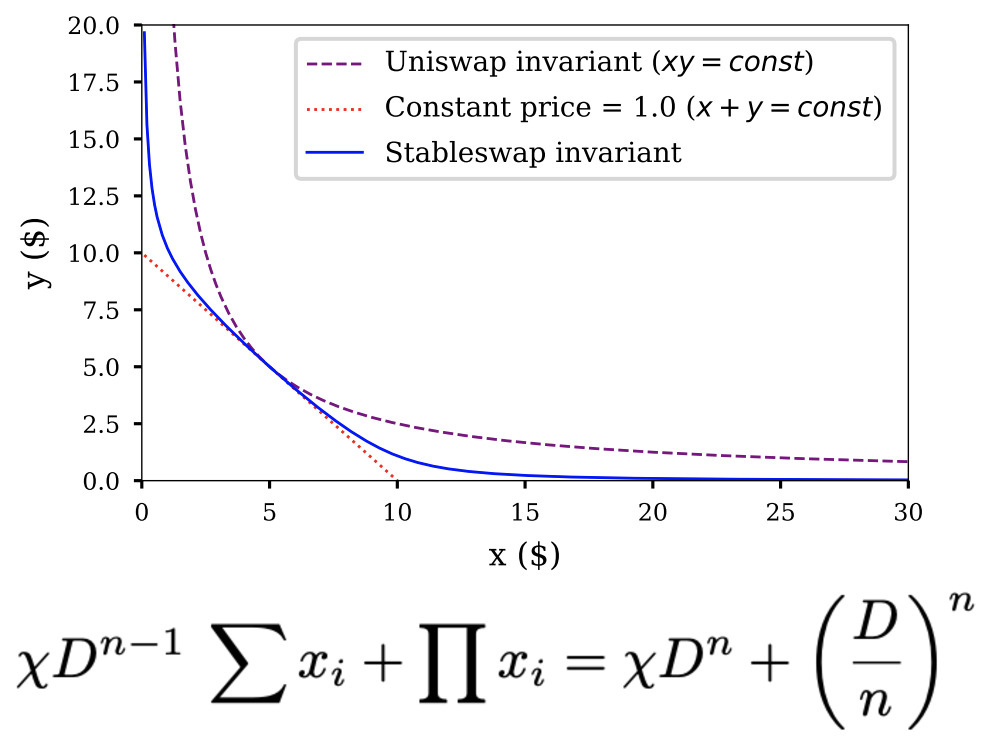
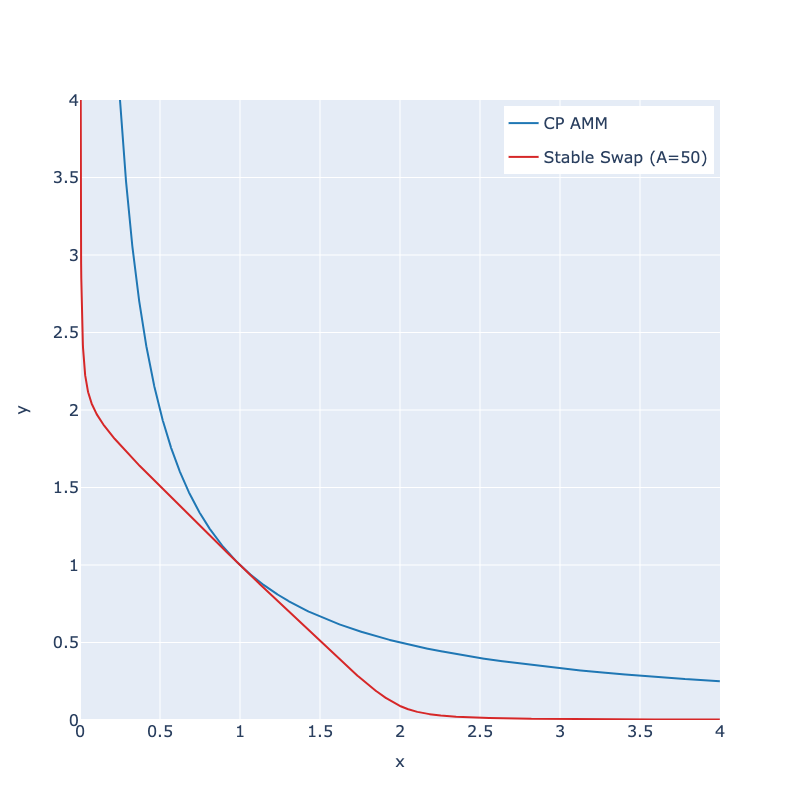
Choosing between StableSwap and traditional Automated Market Makers (AMMs) comes down to how you value price stability versus liquidity flexibility. StableSwap, popularized by Curve Finance, uses a hybrid invariant that behaves like a constant product AMM for large trades but mimics a constant sum model for small deviations. This design keeps pegs tight and slippage near zero for stablecoin swaps.
Traditional AMMs like Uniswap V3 rely entirely on the constant product formula ($x * y = k$). While this structure offers deep liquidity across diverse asset classes, it struggles with stable assets. Even minor price drifts trigger significant impermanent loss, making traditional AMMs inefficient for trading assets that should remain at parity.
The decision isn't just about which protocol is "better," but which fits your specific trading volume and asset type. Below is a direct comparison of the core mechanics.
| Feature | StableSwap (e.g., Curve) | Traditional AMM (e.g., Uniswap V3) |
|---|---|---|
| Best For | Stablecoin-to-stablecoin swaps | Volatile asset pairs (ETH/USDC) |
| Price Impact | Near zero for small trades | High for stable pairs |
| Impermanent Loss | Minimal due to peg stability | Significant for correlated assets |
| Capital Efficiency | Lower; requires more depth | Higher; concentrated liquidity |
| Complexity | High; complex invariant math | Moderate; standard bonding curve |
When to Use StableSwap
StableSwap is the superior choice when trading assets with a fixed or pegged value, such as USDC, USDT, or DAI. If you are executing large volume trades where even 0.1% slippage erodes profits, the StableSwap invariant is essential. It effectively allows traders to exit positions with minimal cost, acting as a reliable on-ramp or off-ramp for stable liquidity.
When to Use Traditional AMMs
Traditional AMMs remain the standard for volatile assets. If you are trading pairs like ETH/USDC or BTC/ETH, the constant product model provides the necessary depth and price discovery mechanisms that StableSwap cannot offer. StableSwap’s rigid peg-dependence makes it ill-suited for assets that naturally fluctuate in value, as the invariant would fail to price discovery correctly during market swings.
Where each option wins
Choosing between StableSwap and traditional Automated Market Makers (AMMs) comes down to asset volatility and the specific mechanics of your strategy. While traditional AMMs like Uniswap use a static constant product formula that excels in diverse markets, StableSwap algorithms—popularized by Curve Finance—adjust their pricing curves to minimize slippage for assets pegged to the same value. This structural difference dictates exactly when each protocol serves the user best.
Best for Stablecoins and Pegged Assets
StableSwap is the superior choice when trading assets with similar price anchors, such as USDC against USDT or wrapped Bitcoin against liquid staked ETH. In these environments, traditional AMMs suffer from "impermanent loss" drag and high slippage because they treat stable assets as highly volatile. StableSwap protocols flatten the curve near the peg, allowing for near-zero slippage trades and significantly reduced impermanent loss for liquidity providers. This makes them the standard for yield farming and treasury management where capital efficiency on stable pairs is paramount.
Best for Volatile and Cross-Asset Trading
Traditional AMMs remain the industry standard for trading highly volatile assets or pairs with vastly different price correlations, such as ETH against WBTC or new meme tokens. The constant product formula ($x \times y = k$) naturally absorbs volatility, providing deep liquidity for price discovery. If you are trading assets that frequently diverge in value or are introducing a new token to the market, a traditional AMM offers better price discovery and resilience against the arbitrageurs that would otherwise drain a StableSwap pool.
Best for Long-Term Liquidity Provision
For liquidity providers (LPs), the decision hinges on risk tolerance. StableSwap offers a "set and forget" environment for stable pairs, where impermanent loss is negligible, making it ideal for passive income strategies. However, traditional AMMs offer higher potential yields through trading fees on volatile pairs, but this comes with the risk of significant impermanent loss if the price ratio changes drastically. LPs seeking to avoid the complexity of rebalancing should stick to StableSwap for stable assets, while those comfortable with active management or hedging may prefer the higher fee tiers of traditional AMMs.
| Feature | StableSwap | Traditional AMMs |
|---|---|---|
| Best Asset Type | Stablecoins & Pegged Assets | Volatile & Cross-Asset Pairs |
| Slippage | Near-Zero | Higher on Volatile Pairs |
| Impermanent Loss | Minimal | Significant on Diverging Pairs |
| Primary Use Case | Yield Farming & Swaps | Price Discovery & Speculation |
Details Worth Checking
StableSwap protocols offer lower slippage for pegged assets, but they are not risk-free. Before allocating capital, verify the specific parameters that govern your exposure. The following checklist outlines the critical risks and exclusions to review.
Check if the pool relies on a single provider or a small group of "whales." High concentration increases the risk of a single entity manipulating prices or withdrawing liquidity during market stress, leaving retail users with no exit path.
Many StableSwap implementations retain admin keys that can pause trading, change fees, or withdraw funds. Verify whether the contract is fully decentralized or if a multisig wallet holds privileged access. This distinction determines whether you are exposed to insider threats.
While StableSwap minimizes IL for pegged assets, it does not eliminate it entirely if the peg breaks. Understand the fee structure and whether the protocol adjusts trading fees dynamically to compensate providers during high volatility periods.

Look for recent, comprehensive audits from reputable firms. Older audits may not cover recent upgrades or forked implementations. Prioritize protocols that have undergone multiple independent reviews and have a public bug bounty program.
Stableswap hub: what to check next
StableSwap mechanisms, pioneered by Curve Finance, solve the slippage issues inherent in traditional Constant Product AMMs like Uniswap when trading assets with similar values. By blending the liquidity depth of order books with the ease of automated market makers, StableSwap provides the impermanent loss protection and low fees that have become standard for stablecoin trading in 2026.
No comments yet. Be the first to share your thoughts!