
The 2026 stableswap regulatory shift
The landscape for stableswap protocols has undergone a fundamental restructuring in 2026. What was once a period of rapid, largely unregulated expansion has given way to an era defined by strict compliance frameworks and heightened scrutiny from financial authorities. This shift is not merely a reaction to market volatility but a structural adjustment to accommodate the massive growth of stablecoins in the broader financial ecosystem.
According to a July 2026 update from the New York Fed, stablecoin issuance has continued to grow significantly since April 2025. This expansion has not occurred in isolation. The central bank’s analysis highlights how shocks from outside the crypto industry—such as traditional banking liquidity crunches or macroeconomic policy shifts—now directly impact stablecoin stability and, by extension, the liquidity pools that rely on them. Stableswap mechanisms, which are critical for low-slippage trading, are now subject to the same external pressure tests as traditional financial institutions.
The New York Fed's 2026 update notes continued stablecoin growth alongside external economic shocks, impacting DeFi liquidity. This convergence means stableswap protocols must now account for traditional market risks in their liquidity models.
Compliance is no longer an optional add-on but a foundational requirement. Protocols that fail to adapt to these new standards risk losing access to institutional liquidity and facing regulatory penalties. The focus has shifted from pure yield optimization to resilience and transparency. As stablecoins become more deeply integrated with traditional finance, the margin for error in liquidity management has narrowed, requiring protocols to adopt more robust risk management frameworks.
For participants in the stableswap ecosystem, this means a new set of rules governing liquidity provision and trading. The emphasis is on maintaining sufficient reserves and ensuring that liquidity pools can withstand both crypto-specific and traditional market shocks. This regulatory shift aims to protect users and maintain market integrity, even as it imposes new operational burdens on protocol developers.
How AI optimization and new hooks alter slippage
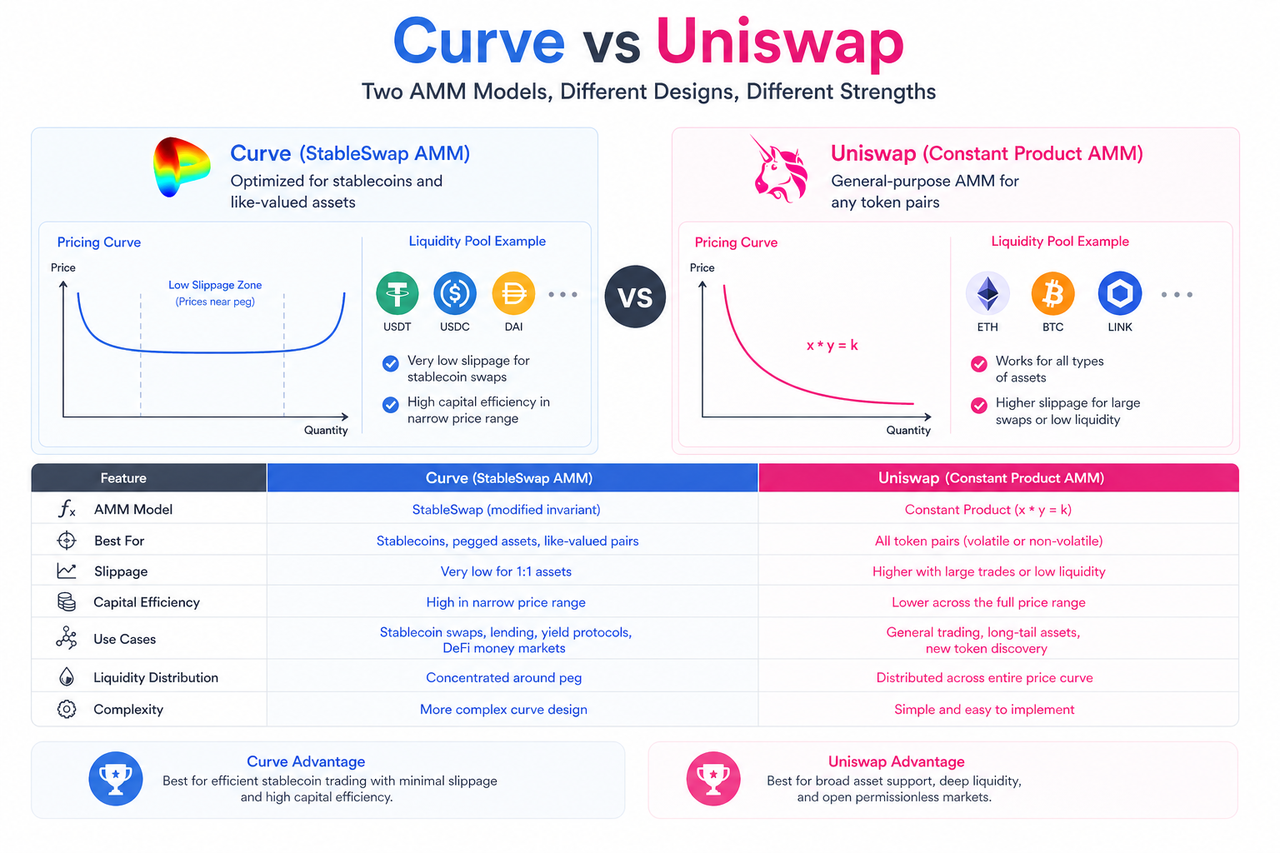
The stableswap algorithm has undergone a structural shift, moving from static invariant curves to dynamic, AI-optimized models. This evolution addresses the limitations of traditional constant-product formulas by allowing liquidity providers to adjust their risk exposure in real time. According to Curve Finance documentation, these advanced invariants reduce impermanent loss for providers while maintaining tight pegs for users, a critical distinction for institutional capital deployment.
AI-driven optimization algorithms now analyze on-chain liquidity depth and volatility metrics to adjust swap fees and capital allocation automatically. This dynamic adjustment minimizes slippage during high-volume trading periods, a factor that traditional automated market makers (AMMs) often fail to manage efficiently. The Federal Reserve’s recent reports on stablecoin settlement speeds highlight that reduced slippage directly correlates with improved payment finality and reduced counterparty risk.
The integration of Uniswap v4 hooks further transforms this landscape. As demonstrated in the recent Cantina StableSwap Hooks competition, developers can now attach custom logic to v4 pools without forking the core protocol. This hook-based architecture allows for the implementation of Curve-style stableswap behavior within the Uniswap ecosystem, bridging the gap between high-throughput DEXs and low-slippage stablecoin pools.
These technical changes are not merely incremental; they represent a fundamental rethinking of capital efficiency. By combining AI optimization with flexible hook implementations, the market is moving toward a model where liquidity is not static but responsive to real-time economic conditions. This responsiveness is essential for maintaining stability in a regulatory environment that demands transparency and predictability.
NACHA’s Smarter Faster Payments conference in San Diego features a dedicated stablecoin track, signaling institutional focus on payment infrastructure.
The Cantina competition showcases Uniswap v4 hook implementations, including Revert Finance’s StableSwap Hooks, bringing Curve-style efficiency to v4.
The first Stable Summit in New York City convenes institutional leaders to discuss the next generation of stablecoin standards and compliance.
Compliance checks for cross-chain swaps
StableSwap works best as a clear sequence: define the constraint, compare the realistic options, test the tradeoff, and choose the path with the fewest hidden costs. That order keeps the advice usable instead of decorative. After each step, pause long enough to check whether the recommendation still fits the reader's actual situation. If it depends on perfect timing, unusual access, or a best-case budget, include a simpler fallback.

Liquidity risks in low-volatility pairs
AI-optimized StableSwap pools are engineered to minimize slippage, but this efficiency introduces distinct structural vulnerabilities. When algorithmic invariants prioritize smooth trading curves over price discovery, liquidity becomes fragile under specific market conditions. Understanding these risks is essential for institutional participants navigating the evolving regulatory landscape.
Impermanent loss dynamics in stable pairs
Contrary to common belief, stablecoin pairs are not immune to impermanent loss. While volatility is low, divergences in peg stability or reserve composition create drift. When one asset loses its peg relative to another, the automated market maker (AMM) invariant forces the pool to rebalance, resulting in a net loss for liquidity providers compared to holding the assets off-chain.
Curve Finance’s documentation highlights that this loss is driven by the deviation from the 1:1 ratio. In low-volatility environments, the cost of rebalancing is low, but the cumulative effect of persistent peg drift can erode capital significantly. For high-stakes portfolios, this invisible erosion must be accounted for in risk models just as traditional counterparty risk would be.
Cross-chain liquidity fragmentation
As StableSwap protocols expand across multiple blockchains, liquidity fragments. Capital is no longer concentrated in a single deep pool but dispersed across isolated chains. This fragmentation increases the cost of arbitrage and reduces the efficiency of price discovery. A trader seeking to execute a large order may face higher slippage than anticipated if the primary liquidity reservoir is on a different chain.
This fragmentation also complicates regulatory oversight. The New York Federal Reserve has noted that the dispersion of assets across jurisdictions creates blind spots for compliance monitoring. When liquidity is siloed, it becomes difficult to trace the flow of funds or assess systemic risk accurately. For institutions, this means that a single stablecoin pair may appear liquid on one chain while being illiquid on another, creating inconsistent risk exposures.
The role of AI in amplifying risks
AI-driven optimization tools can exacerbate these risks by reacting too quickly to small signals. When algorithms detect minor peg deviations, they may rapidly withdraw liquidity or shift positions, triggering a feedback loop. This speed can turn a minor inefficiency into a significant liquidity crunch, leaving human operators unable to respond in time.
The combination of AI speed and fragmented liquidity creates a unique risk profile. It is not merely about the volume of assets but the speed and direction of their movement. Regulatory frameworks must account for this dynamic nature of liquidity, ensuring that protocols maintain sufficient buffers to withstand rapid AI-driven shifts.
Mitigation strategies for institutional participants
Institutional participants can mitigate these risks through careful pool selection and active monitoring. Diversifying across multiple chains and protocols can reduce exposure to any single point of failure. Additionally, maintaining a portion of liquidity in traditional, regulated venues provides a hedge against crypto-specific risks.
Regular audits of pool compositions and peg stability are also crucial. By understanding the underlying mechanics of each pool, participants can anticipate potential risks and adjust their positions accordingly. This proactive approach is essential for maintaining stability in an increasingly complex and interconnected financial ecosystem.
Frequently asked questions about stableswap 2026
The following questions address the technical mechanics and regulatory considerations of StableSwap 2026 protocols.
These updates reflect current market structures as of 2026. For detailed technical specifications, refer to the Curve Knowledge Hub.
No comments yet. Be the first to share your thoughts!