
How StableSwap reduces trading costs
Standard automated market makers (AMMs) rely on a simple geometric invariant that causes slippage to spike exponentially as trading volume increases. When you swap large amounts of stablecoins—assets that should theoretically hold a 1:1 ratio—this mathematical limitation forces traders to accept unfavorable prices. StableSwap algorithms solve this by introducing a specialized invariant curve that behaves differently depending on the asset's price deviation from its peg.
As documented in the Curve Knowledge Hub, the StableSwap invariant is engineered to provide minimal slippage for assets with similar values, while still allowing for reasonable price discovery when assets diverge significantly. Think of it as a liquidity pool that acts like a deep, calm pool near the center (where prices are stable) but transitions to a steeper slope only when necessary. This allows traders to execute large orders without moving the market price against themselves.
The practical result is a trading environment where the cost of execution remains predictable and low, even during high-volume periods. For stablecoin traders, this means preserving capital efficiency and avoiding the "impermanent loss" friction inherent in traditional constant-product formulas. By locking liquidity into these optimized pools, traders gain access to the most efficient cross-market mechanisms available for stable assets.
Top StableSwap Hub platforms compared
StableSwap hubs operate on a specific mathematical principle: they prioritize trading efficiency for assets with correlated values, such as USD stablecoins or wrapped Bitcoin variants. Unlike standard AMMs that rely on a rigid constant-product formula, StableSwap implementations use a custom invariant curve. This curve flattens near the peg, allowing large trades to execute with minimal slippage before the price impact accelerates as the ratio deviates from equilibrium.
Curve Finance remains the dominant infrastructure for this mechanism, offering the deepest liquidity and lowest fees for major stablecoin pairs. Its architecture supports both plain pools for up to eight coins and metapools for wrapped assets. PancakeSwap has integrated a similar StableSwap feature to address liquidity fragmentation on the BNB Chain, providing a lower-cost alternative for users trading assets like HAY, BUSD, and USDT. Other implementations exist, but Curve and PancakeSwap represent the most robust deployments of this technology in 2026.
The table below outlines the structural differences between these primary hubs, focusing on pool capacity, fee structures, and supported chains. Understanding these distinctions is critical for routing trades effectively and minimizing capital loss during execution.
| Platform | Architecture | Max Coins | Chains | Fee Structure |
|---|---|---|---|---|
| Curve Finance | Stableswap/Cryptoswap | 8 (plain) | Ethereum, Polygon, Arbitrum, Optimism, zkSync | 0.04% - 0.04% |
| PancakeSwap | StableSwap AMM | 2 | BNB Chain, Ethereum | 0.04% - 0.05% |
| Osmosis | GAMM Stableswap | 8 | Cosmos Ecosystem | Variable (Pool-specific) |
| Trader Joe | StableSwap v2 | 4 | Avalanche, Arbitrum, BNB | 0.05% - 0.05% |
While the fee structures appear similar, the actual cost of a trade depends heavily on the invariant's resistance to price impact. Curve’s multi-coin pools generally offer superior depth for large orders, whereas PancakeSwap’s two-coin StableSwap pools are optimized for simplicity and speed on the BNB Chain. Traders should verify the specific pool parameters before executing, as slippage tolerance varies significantly between these implementations.
Essential hardware for secure DeFi trading
Trading on StableSwap hubs like Curve or PancakeSwap minimizes slippage—the difference between the expected price of a trade and the price at which the trade is executed. However, low slippage on the blockchain does not protect your assets from external threats. High-stakes finance demands that the security of your private keys be treated with the same rigor as the trading strategy itself. A hardware wallet acts as an offline vault, ensuring that your stablecoin holdings remain secure even if your trading computer is compromised.
When selecting a device, prioritize hardware wallets with a strong track record in the DeFi ecosystem. These devices create a secure element that signs transactions locally, meaning your private keys never touch the internet. This isolation is critical when interacting with complex smart contracts on decentralized exchanges.
Below are the primary hardware solutions recommended for securing assets during StableSwap trading.


As an Amazon Associate, we may earn from qualifying purchases.
Always verify the authenticity of your device upon arrival. Official documentation from Ledger and SatoshiLabs (Trezor) provides critical steps for initializing your device and recovering your seed phrase. Never share your 24-word recovery phrase with anyone, including support staff. For the most secure experience, perform the initial setup in a clean, offline environment and update your firmware only through the official vendor applications.
Execute low slippage trades safely
Trading stablecoins on a StableSwap hub requires discipline, not just capital. The StableSwap invariant algorithm minimizes price impact only when assets remain tightly correlated. If you ignore the mechanics, you will pay a premium or suffer impermanent loss. The following workflow ensures you execute within the curve’s optimal range.
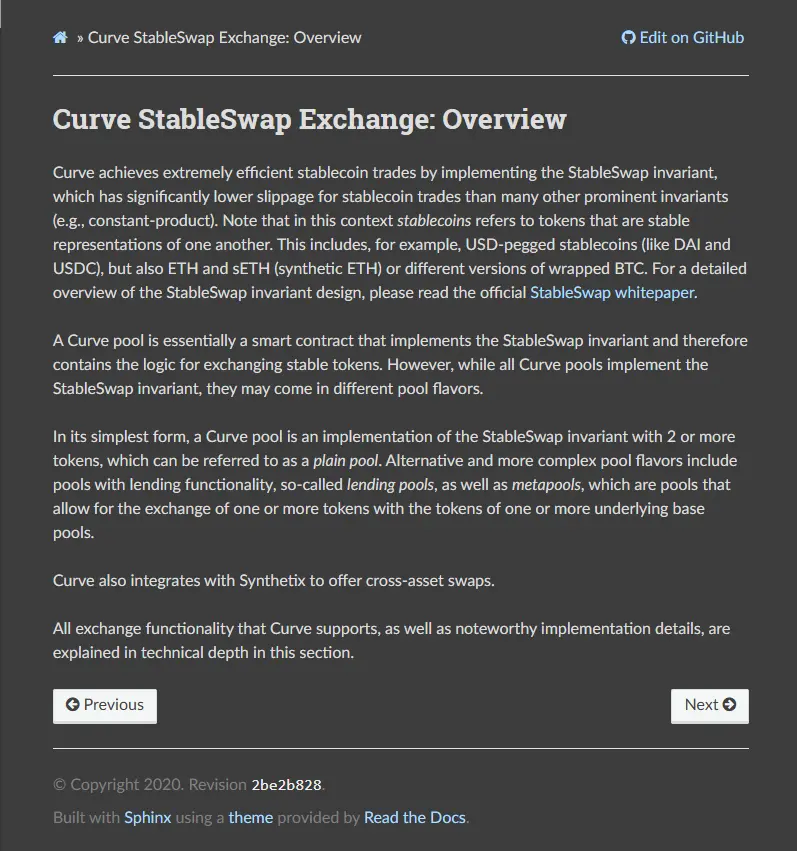
Before swapping, confirm the pool holds sufficient liquidity for your trade size. StableSwap pools rely on a specific invariant curve that offers low slippage around a target price ratio. If the pool is shallow, the curve steepens rapidly, and slippage spikes. Check the total value locked (TVL) and the specific asset ratio. If one asset is underrepresented, the pool is imbalanced and dangerous to trade.
Set your slippage tolerance to 0.5% or lower. Unlike standard AMMs, StableSwap is designed for near-one-to-one swaps. A higher tolerance invites front-running and MEV bots. If the transaction fails due to tight slippage, it means the pool is moving against you—do not widen the tolerance. Walk away rather than accept a bad price.

Ensure your wallet has enough native token for gas. High gas fees can erase thin margins in low-slippage trading. Use a layer-2 or an L1 with low fees if possible. Check the current gas price on the network before submitting the transaction.
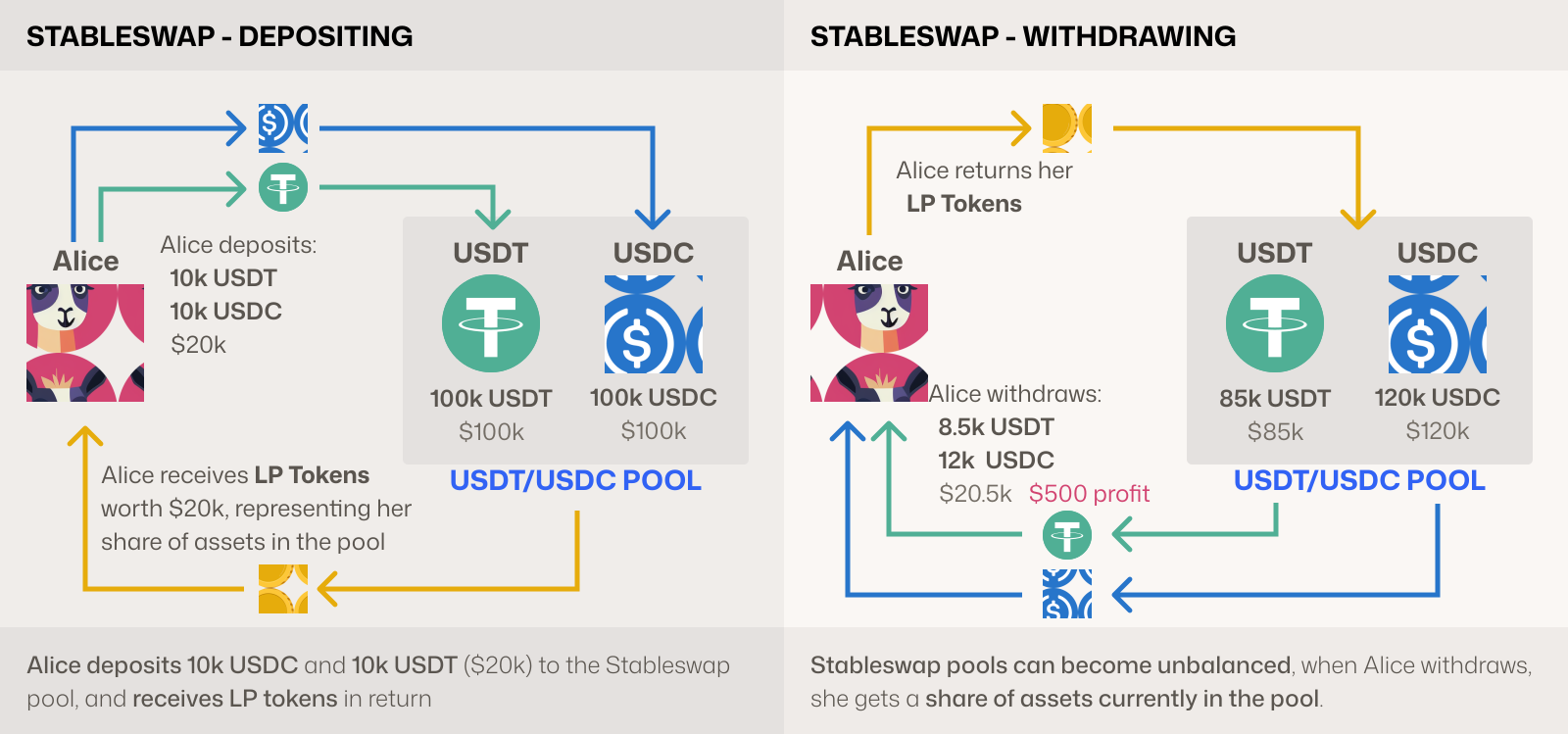
If you are providing liquidity, understand that impermanent loss occurs when the price ratio deviates from the entry point. StableSwap pools mitigate this, but it is not zero. If the stablecoins depeg significantly, your liquidity will shift into the more stable asset. Monitor the pool’s balance and rebalance if necessary.
By following these steps, you protect your capital from unnecessary losses. Always refer to the official documentation for the specific protocol you are using, as parameters can vary.


As an Amazon Associate, we may earn from qualifying purchases.
Common questions about StableSwap pools
StableSwap represents a specialized mechanism designed to facilitate efficient trading between assets with tightly correlated prices. Unlike standard automated market makers that rely on the constant product formula, StableSwap utilizes an invariant curve specifically engineered to minimize slippage. This mathematical adjustment allows traders to execute large orders with minimal price impact, functioning effectively as a "Uniswap with leverage" for stable assets.
What is StableSwap?
StableSwap is a specialized trading feature built to handle pairs of assets that maintain a stable price ratio, such as USD-pegged stablecoins or liquid staking tokens. By leveraging an invariant curve slippage function, it ensures that trades between these correlated assets incur significantly lower fees and slippage compared to standard liquidity pools. This design is critical for maintaining capital efficiency in high-volume trading environments.
What is a StableSwap pool?
A StableSwap pool is a liquidity reserve containing two assets that are intended to remain tightly correlated, such as USDT and USDC. The automated market maker (AMM) provides low slippage around the expected price ratio, ensuring that the market price stays anchored to the peg. If the price deviates, the pool's curve mechanics incentivize arbitrageurs to restore balance, keeping the exchange rate stable for traders.
How does StableSwap reduce slippage?
Slippage occurs when a trade's execution price differs from the quoted price, typically due to low liquidity or high volatility. StableSwap reduces this by flattening the price curve near the peg. This mathematical structure absorbs large trade volumes without causing significant price displacement. As a result, traders can swap substantial amounts of stablecoins without suffering the sharp price penalties common in traditional liquidity pools.
No comments yet. Be the first to share your thoughts!