
Why StableSwap 2026 Matters
The financial landscape of 2026 is defined by a quiet but massive shift: stablecoins are no longer just a crypto-native curiosity. They have become a primary rail for global value transfer, with transaction volumes in 2024 already surpassing the combined totals of Visa and Mastercard. As we move into 2026, this momentum is accelerating, with projections suggesting stablecoins will capture 3% of all US dollar payments this year, rising to 10% by 2031.
For institutional players and high-volume traders, this scale introduces a critical technical challenge: slippage. In traditional finance, large orders are absorbed by deep liquidity pools and market makers. In decentralized exchanges, naive trading mechanisms cause price impact to spike as volume increases. Without specialized low-slippage algorithms like StableSwap, moving significant capital in and out of stablecoin pairs becomes prohibitively expensive, eroding margins and disrupting settlement efficiency.
Low-slippage mechanisms are the infrastructure that makes this new era of payments viable. They allow large blocks of stablecoins to swap with minimal price deviation, effectively bridging the gap between decentralized liquidity and institutional-grade execution. As platforms like Osmosis and others refine these mechanisms, the focus is shifting from mere accessibility to precision engineering of liquidity pools.

Curve Finance: The Institutional Standard
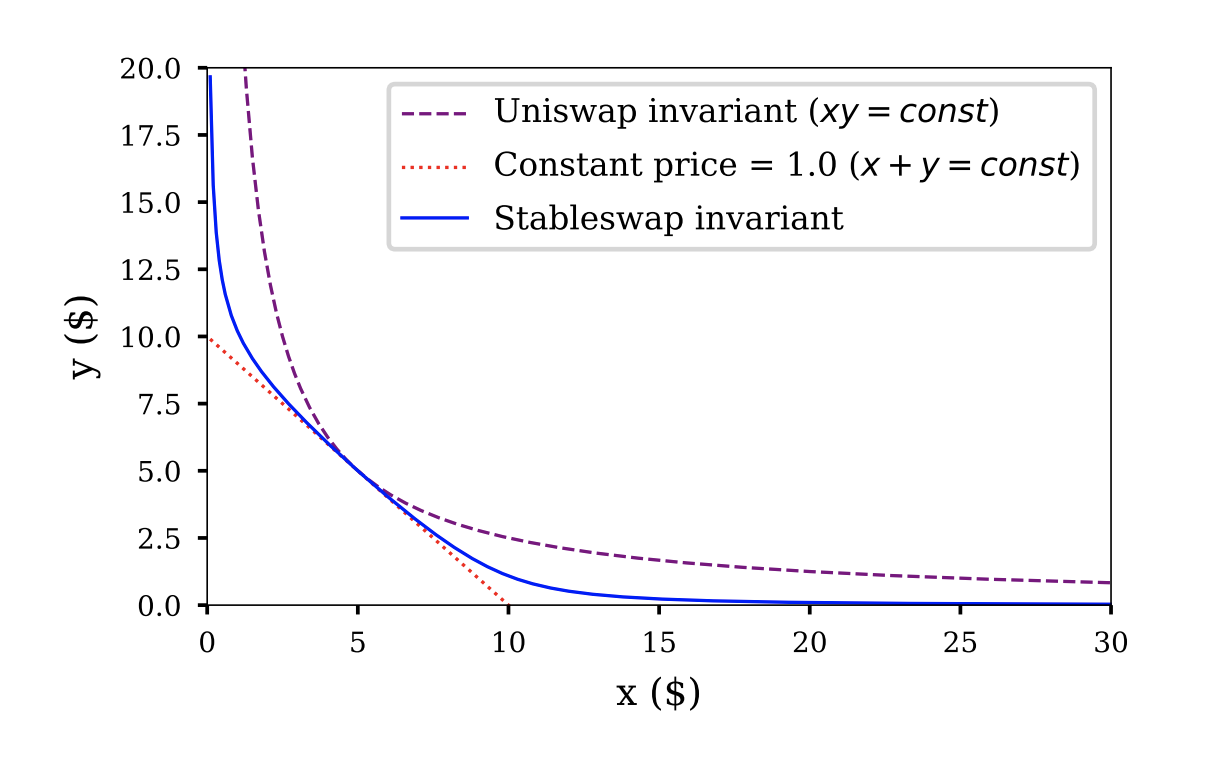
Curve Finance established the benchmark for stablecoin trading by replacing the traditional constant product formula with its proprietary StableSwap invariant. This algorithmic shift allows large trades to execute with minimal slippage, effectively bridging the gap between centralized exchanges and decentralized protocols. For institutional traders and high-volume DeFi users, Curve is not merely an option; it is the primary infrastructure layer for stable asset liquidity.
The platform’s architecture relies on a specialized curve that remains flat near the 1:1 peg of stablecoins, absorbing large order flows without significant price impact. As trading volume moves away from the peg, the curve steepens, introducing a slight premium that incentivizes arbitrageurs to keep prices aligned. This mechanism ensures that even substantial capital movements maintain tight spreads, a critical feature for entities managing millions in daily volume.
Curve’s Next Generation (NG) invariant further refines this precision by allowing pools to dynamically adjust their parameters based on real-time market conditions. This flexibility enhances capital efficiency and reduces the risk of impermanent loss for liquidity providers. The result is a trading environment where depth and stability are prioritized, making Curve the preferred venue for complex stablecoin strategies.

The user interface reflects this institutional focus, presenting a clean, data-dense dashboard that prioritizes execution clarity over speculative flair. Traders can view real-time depth charts, pool compositions, and expected slippage before confirming a swap. This transparency is essential for risk management, allowing users to verify that the trade will execute within their predefined parameters before committing capital.
PancakeSwap StableSwap on BNB Chain
PancakeSwap’s StableSwap implementation on the BNB Chain offers a distinct alternative for traders prioritizing low gas fees without sacrificing execution quality. By leveraging the BNB Chain’s infrastructure, the protocol maintains the low slippage characteristics of the original StableSwap invariant while reducing the transaction costs that often erode margins on smaller or frequent trades.
The interface presents a clean, institutional-grade trading environment. Traders interact with a direct swap panel where stablecoin pairs like BUSD, USDT, and USDC are displayed with real-time depth indicators. The design minimizes visual clutter, allowing users to focus on the effective exchange rate and the minimal price impact associated with the curve-based liquidity model.
Data from DeFiLlama confirms that the protocol consistently captures significant volume in stablecoin pairs, reflecting its role as a primary liquidity hub for the BNB ecosystem. The combination of a proven invariant curve and low-cost transactions creates a robust environment for stable asset management.
Cross-Chain StableSwap Gateways
Institutional traders no longer need to bridge assets manually or accept high slippage when moving stablecoins across blockchains. 2026 protocols have integrated cross-chain StableSwap gateways that route liquidity through unified pools, allowing capital to move between networks with minimal price impact.
These gateways function like automated clearinghouses. Instead of executing trades on isolated chains, the protocol identifies the deepest liquidity pool across the entire network and fills the order there, settling the result on the user’s preferred chain. This reduces the friction that previously made large-scale stablecoin transfers expensive and slow.
The following platforms lead this integration, offering seamless movement of stablecoins without the typical cross-chain penalties.
Top Cross-Chain StableSwap Platforms
-
Curve Finance
The industry standard for stablecoin liquidity, offering deep pools and low slippage for major assets like USDC and USDT across Ethereum, Arbitrum, and Optimism. -
Eco Routes
Specializes in 1:1 swaps for stablecoins, using a tier-by-size framework to direct small trades to DEXs and large trades to OTC desks for optimal pricing. -
Astroport
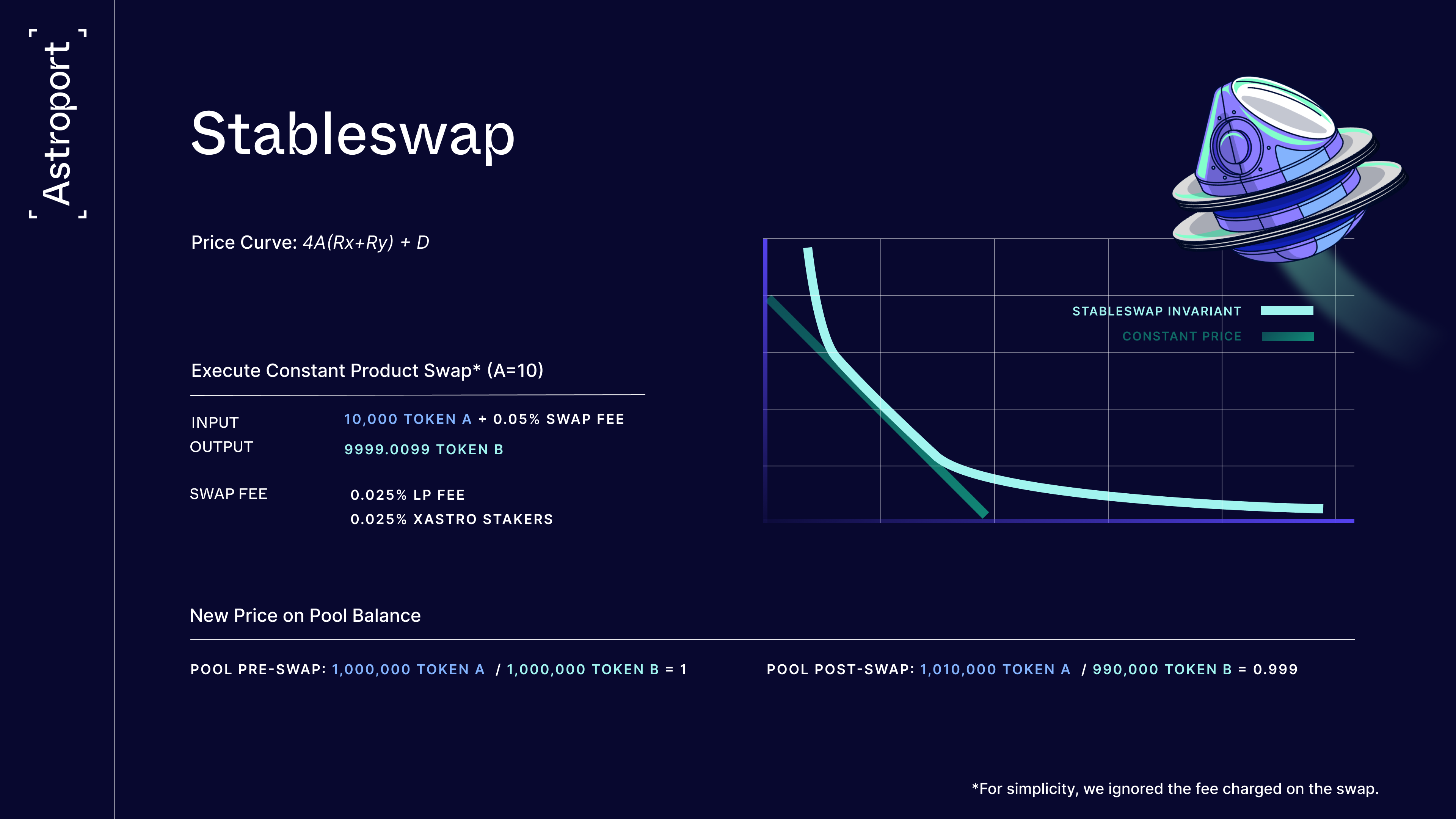
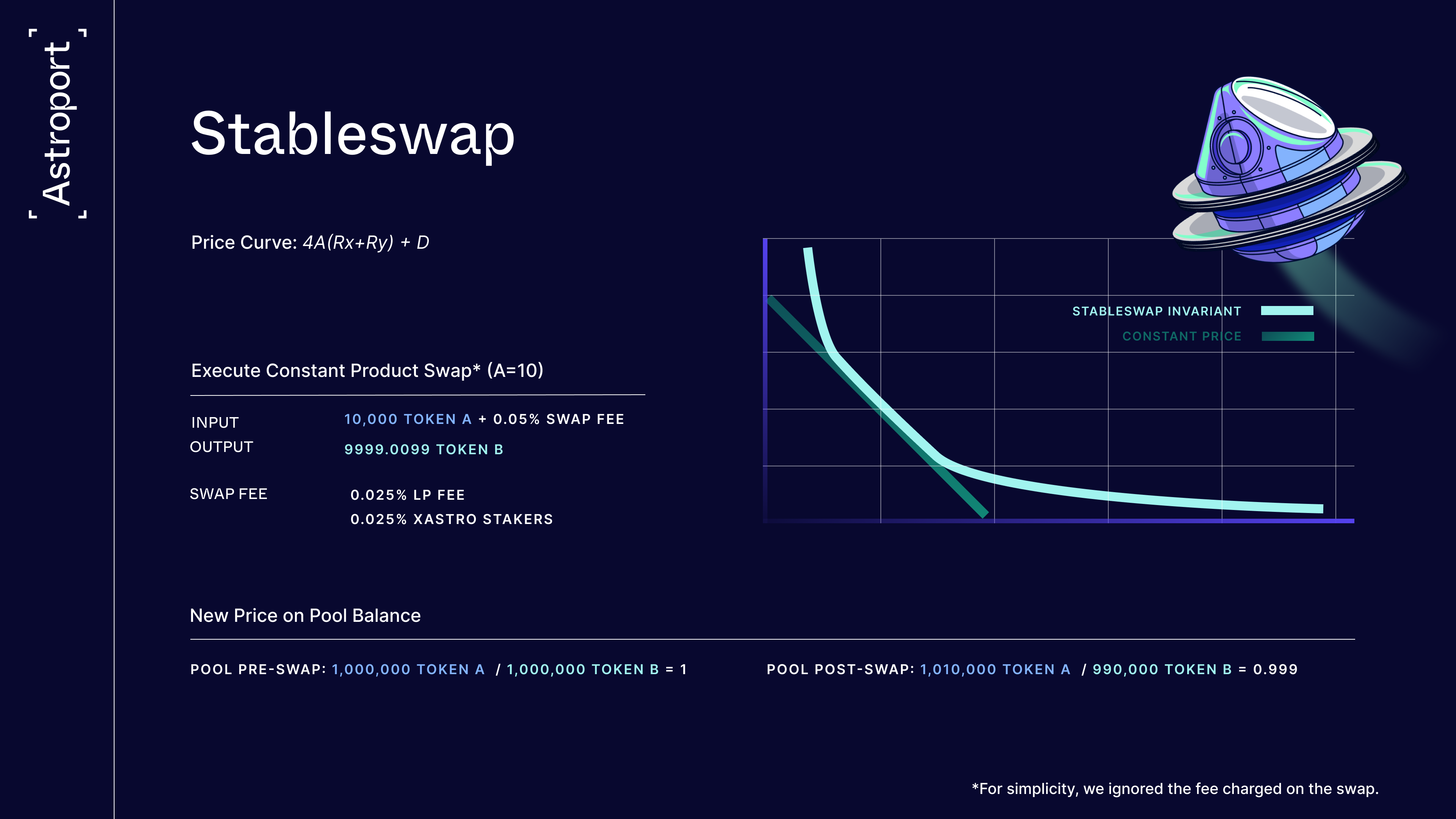
Provides robust stableswap pools on the Terra ecosystem and beyond, leveraging lightweight consensus for fast, low-cost cross-chain settlements.
By leveraging these gateways, institutions can maintain capital efficiency while navigating the fragmented nature of multi-chain finance. The result is a trading experience that feels as smooth as a centralized exchange, but with the underlying security of decentralized liquidity.
Choosing the Right StableSwap Platform
Selecting a StableSwap platform in 2026 requires evaluating three concrete metrics: slippage tolerance, fee structure, and liquidity depth. Institutional traders prioritize interfaces that execute large orders without significant price impact, making the choice of protocol critical for capital efficiency.
Curve Finance remains the benchmark for deep liquidity on Ethereum and major L2s. Its StableSwap invariant algorithm is engineered to minimize slippage on pegged assets, offering the tightest spreads for high-volume swaps. The interface reflects this precision, displaying real-time depth charts that allow traders to visualize order book density before execution.
For traders seeking lower fees or cross-chain accessibility, alternatives like PancakeSwap’s StableSwap feature provide viable options. While its liquidity depth may not always match Curve’s on Ethereum, it offers competitive slippage profiles for specific stablecoin pairs, particularly on BNB Chain. The trading interface here is streamlined for speed, prioritizing quick swaps over complex depth visualization.
| Platform | Slippage Profile | Fee Structure | Supported Chains |
|---|---|---|---|
| Curve Finance | Minimal (Deep Liquidity) | 0.04% - 0.04% | Ethereum, Arbitrum, Optimism, Polygon |
| PancakeSwap StableSwap | Low (Targeted Pairs) | 0.01% - 0.04% | BNB Chain, Ethereum, zkSync |
When evaluating these platforms, consider the size of your trade relative to the pool’s total value locked. For trades exceeding $100,000, Curve’s deep pools typically offer superior execution. For smaller, frequent swaps, PancakeSwap’s lower fee structure may provide better net returns. Always verify the specific pair’s liquidity before executing, as slippage can spike rapidly in thinner markets.
Frequently Asked Questions About StableSwap
StableSwap mechanics prioritize capital efficiency for pegged assets. The Curve StableSwap invariant allows traders to execute large orders with minimal slippage, a feature that distinguishes it from standard Automated Market Makers. This algorithm is the foundational layer for low-cost stablecoin trading.
Institutional adoption is accelerating as stablecoins move into mainstream payments. Industry projections suggest stablecoins could represent 3% of all US dollar payments in 2026. This shift drives demand for platforms that offer institutional-grade liquidity and transparent fee structures.
For traders seeking specific pool data, official documentation provides the most accurate real-time metrics. Always verify pool compositions and fee tiers directly with the protocol before executing high-value trades.
No comments yet. Be the first to share your thoughts!