
What makes a stableswap hub different
Standard automated market makers (AMMs) like Uniswap use a constant product formula ($x \times y = k$). This works well for volatile assets, but it creates a problem for stablecoins. When you swap USDC for USDT, the prices are nearly identical. A standard AMM still treats them as volatile, causing the price to shift significantly even with small trades. This shift is called slippage. If you try to swap a large amount, the "price impact" can be high, meaning you receive fewer tokens than expected.
StableSwap hubs solve this by using a modified invariant. Instead of a single hyperbolic curve, StableSwap blends two behaviors. Near the parity point (where assets are equal in value), the curve is almost flat. This mimics an order book, allowing large trades with minimal price impact. As the reserves become imbalanced, the curve steepens to match the standard AMM behavior, protecting liquidity providers from impermanent loss.
This design is why stableswap hubs are the preferred choice for stablecoin trading. For example, swapping $10,000 worth of USDC for USDT on a standard AMM might result in a 0.1% slippage. On a StableSwap hub, that same trade might have less than 0.01% slippage. The fees are also typically lower because the protocol doesn't need to compensate LPs for high volatility risk.
The visual difference is clear when comparing the curves. A standard AMM curve is a smooth hyperbola. A StableSwap curve is flat in the middle and steep at the edges. This "flat" section is where the low-slippage magic happens.

Curve Finance: The original stableswap hub
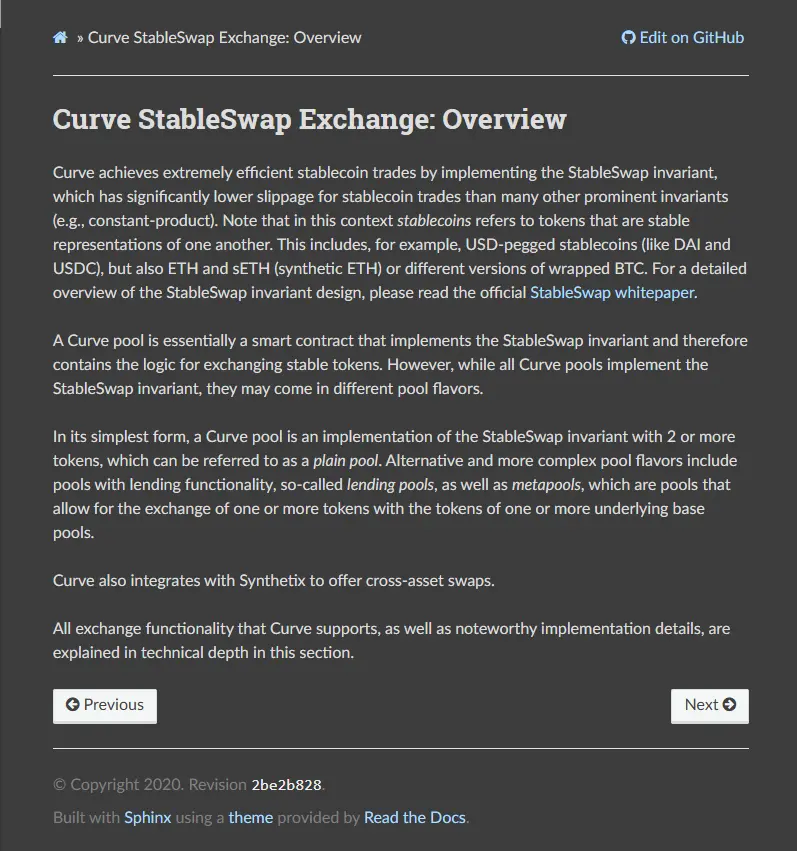
Curve Finance launched the StableSwap algorithm, establishing the standard for low-slippage trading in decentralized finance. By combining the efficiency of automated market makers with the stability of bonding curves, Curve allows traders to swap assets like USDC and USDT with minimal price impact. This architecture remains the foundational layer for most institutional and retail stablecoin liquidity today.
The protocol’s maturity is evident in its depth. When swapping large volumes of USDC for USDT, Curve’s pooled liquidity absorbs the trade with negligible deviation from parity. This is critical for arbitrageurs and treasury managers who require predictable execution costs. The NG upgrade further refined this by supporting plain pools with up to eight coins, expanding the range of stable assets that can trade with similar efficiency.
Curve’s design prioritizes fee efficiency over speculative volatility. Users pay minimal trading fees because the algorithm reduces the incentive for arbitrageurs to extract value from price discrepancies. Instead, the system maintains tight pegs through concentrated liquidity around the 1:1 ratio. This makes Curve the preferred venue for high-frequency stablecoin rotations.
How Solana adapts the StableSwap invariant
The StableSwap invariant was originally designed for Ethereum-compatible chains, but its low-slippage benefits translate directly to high-throughput networks like Solana. By porting the algorithm, developers have created hubs that handle large USDC and USDT swaps with minimal price impact, leveraging Solana’s sub-second finality to match the speed of centralized exchanges.
On Solana, these adaptations remove the gas friction that often slows down arbitrage on Ethereum. A trader swapping $100,000 worth of USDC for USDT experiences near-zero slippage because the pool’s flat curve absorbs the volume without moving the price. The transaction cost is a fraction of a cent, making large-scale stablecoin rebalancing viable for both retail users and institutional protocols.
The technical foundation relies on open-source implementations like the StableSwap program for the Solana token-swap program. This codebase mirrors Curve’s original logic, ensuring that the mathematical guarantee of low slippage holds true even as transaction throughput scales. The result is a decentralized liquidity layer that feels as fast as a centralized order book.
Newer stableswap hub implementations
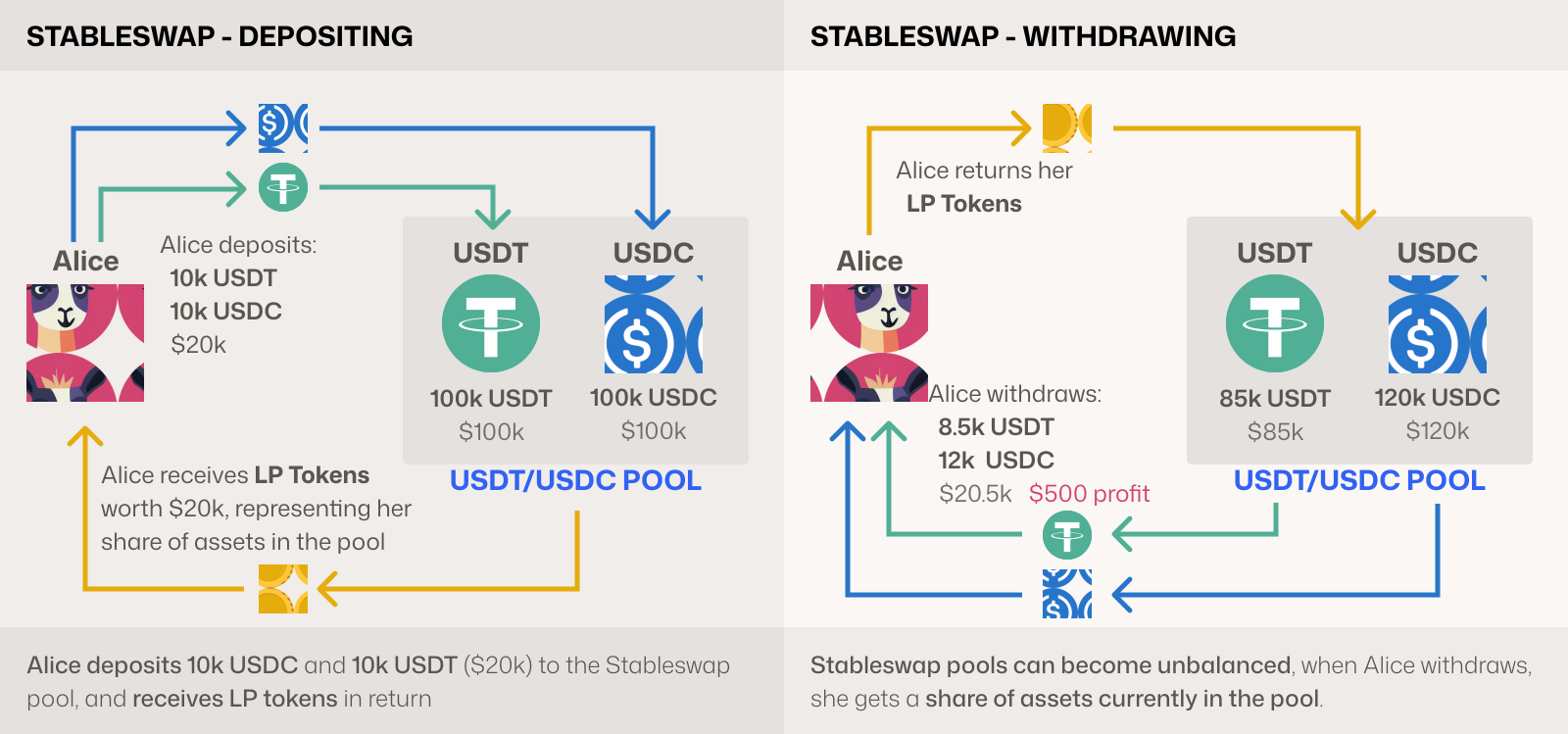
The 2026 landscape for StableSwap Hub protocols includes specialized implementations that prioritize lower slippage on direct stablecoin pairs. While established hubs dominate total volume, newer architectures are gaining traction by offering specific technical advantages, such as permissionless deployment and optimized cross-chain liquidity routes.
Curve StableSwap-ng
Curve’s open-source StableSwap-ng deployment represents a significant shift toward modular, permissionless AMM infrastructure. By allowing anyone to deploy plain pools supporting up to eight coins or metapools for two coins, this implementation reduces reliance on centralized governance for new asset listings. This structure allows emerging stablecoin pairs to launch with deep liquidity pools without waiting for protocol-wide approval. The codebase is publicly available on GitHub for audit and verification.
Hub’s EVM StableSwap
For traders focused on minimal slippage between the most common stablecoins, Hub’s EVM implementation offers a streamlined route for USDC and USDT swaps. This specialized AMM is designed to bypass the default routing inefficiencies found in older models. In direct testing, swapping 1,000 USDC yields 999.6 USDT, compared to only 997 USDT via the standard default route. This efficiency makes it a preferred choice for high-frequency arbitrage and large-scale stablecoin rebalancing.
How to choose the right stableswap hub
Selecting a protocol for USDC and USDT swaps requires balancing three factors: asset compatibility, fee structure, and chain support. Not all hubs support every stablecoin pair, and slippage varies significantly between them.
Look for hubs with deep liquidity in your specific pair. Curve Finance remains the standard for USDC/USDT due to its "flat" invariant curve, which minimizes slippage on large trades. Always verify the effective fee rate, including any MEV protection costs, as high fees can negate low slippage benefits. Check official documentation or GitHub repos for current pool depths.
Chain compatibility is equally critical. A hub may offer the best rates for USDC/USDT, but if it only exists on a chain you don't use, it is not a viable option. Compare cross-chain bridges or multi-chain hubs like Curve or Balancer to find the most efficient route for your assets.
Use a technical chart to visualize the stability of the peg and trading volume. This helps identify hubs with consistent liquidity rather than volatile, thin markets.
Frequently asked questions about stableswap hubs
What is slippage in StableSwap?
Slippage is the difference between the expected price of a trade and the actual price executed. In StableSwap hubs, this cost stays remarkably low because the algorithm flattens the price curve for assets like USDC and USDT. While a standard Uniswap pool might give you 997 USDT for 1,000 USDC due to steep price impact, a StableSwap contract typically delivers 999.6 USDT for the same amount. This "flat" curve minimizes price impact, making it ideal for large stablecoin swaps where capital preservation is the priority.
How do fees compare to Uniswap?
StableSwap hubs generally charge lower trading fees than Uniswap V3 or V2. Because these protocols are designed for high-frequency, low-margin trading, they optimize for volume over per-trade revenue. A typical StableSwap fee might sit around 0.04% to 0.1%, whereas Uniswap V3 can charge 0.05% to 1% depending on the volatility range. The lower fee structure reflects the reduced risk of impermanent loss and the tighter spreads inherent in stablecoin pairs.
Is impermanent loss a risk?
Impermanent loss is significantly lower in StableSwap pools than in volatile AMMs. Since the paired assets (e.g., USDC and USDT) maintain a 1:1 peg, their price ratio rarely diverges. In a standard AMM, large price swings force the pool to sell the appreciating asset and buy the depreciating one, creating a loss relative to holding. In StableSwap, the constant peg means the pool composition remains stable, protecting liquidity providers from the dramatic value drift seen in ETH/USDC pools.
No comments yet. Be the first to share your thoughts!