
What defines a StableSwap Hub
A StableSwap Hub acts as a specialized liquidity aggregation layer designed specifically for pegged assets. Unlike generic Automated Market Makers (AMMs) that treat all token pairs equally, a StableSwap Hub uses a custom invariant algorithm to maintain tight price stability. This structure allows for massive capital efficiency, meaning traders can execute large orders with minimal slippage. For institutions moving significant capital, this precision is the difference between viable execution and market disruption.
Generic AMMs often suffer from high volatility when swapping similar-value assets, such as USDC for USDT. A StableSwap Hub solves this by creating a deep, unified pool where these assets function almost like cash equivalents. The mechanism essentially creates a "Uniswap with leverage" for stablecoins, as described in foundational research on the subject. This allows for near-zero price impact even when trading volumes spike, a feature standard liquidity pools cannot match.
The visual representation of this technology often highlights the seamless integration across different blockchain networks. For instance, the launch of stableswap capabilities on major decentralized exchanges like Osmosis demonstrates how these hubs aggregate liquidity from diverse sources into a single, deep reservoir.

By focusing on institutional-grade depth, these hubs serve as the backbone for high-frequency trading and large-scale treasury management in DeFi. They transform what was once a fragmented landscape of shallow pools into a robust, liquid market where stability is the primary product.
Top institutional pools to watch
Institutional capital moves through liquidity where it faces the least resistance. The leading StableSwap implementations act as the primary arteries for this flow, prioritizing low slippage and capital efficiency over speculative volatility. These hubs are not merely trading pairs; they are infrastructure layers that allow large entities to rotate stablecoins without breaking the market.
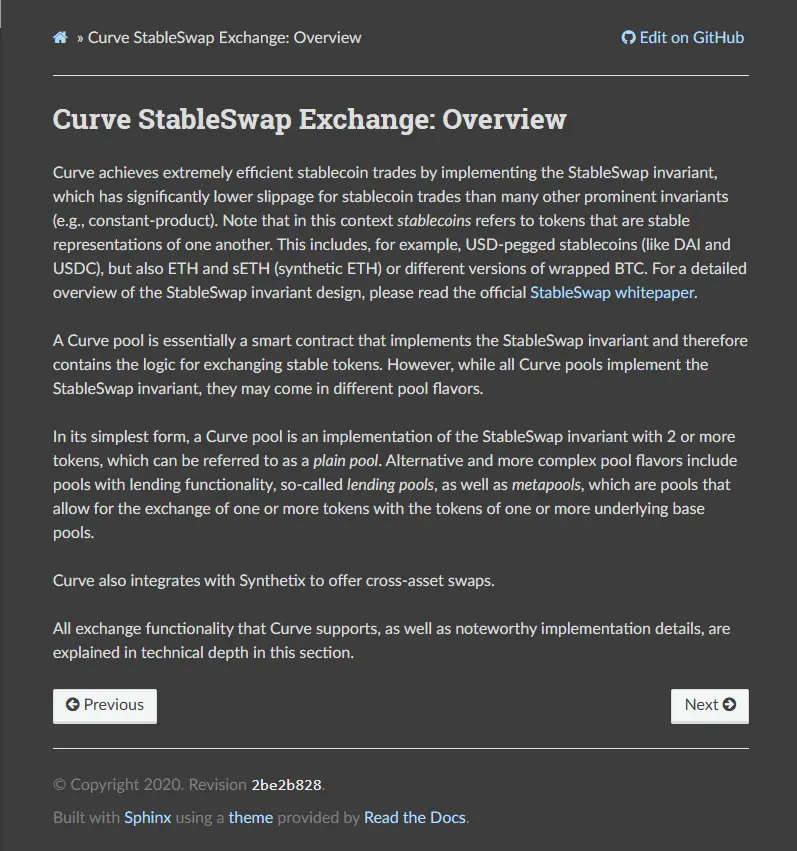
Curve Finance remains the dominant force in this space. Its StableSwap invariant is engineered specifically to keep prices pegged while minimizing the impermanent loss that typically penalizes liquidity providers. This design makes it the default choice for treasury management and large-scale stablecoin swaps. The protocol’s metapools allow external tokens to swap against a base pool, creating deep liquidity layers that institutional desks rely on for execution.
PancakeSwap has adapted this logic for the BNB Chain ecosystem, offering a StableSwap feature that mirrors Curve’s low-slippage approach. For institutions operating within the BNB ecosystem, these pools provide a critical on-ramp and off-ramp for stable assets, ensuring that capital can move quickly between decentralized exchanges and centralized order books.
Solana-based StableSwap implementations, such as those found on Raydium and Orca, are gaining traction due to the network’s high throughput and low transaction costs. For institutions requiring rapid settlement and high-frequency rebalancing, Solana’s architecture offers a distinct advantage in speed and cost efficiency compared to Ethereum L1s.
The following list highlights the most significant StableSwap hubs based on total value locked (TVL) and daily volume, which serve as key indicators of institutional activity.
Leading StableSwap Hubs
-
Curve Finance (Ethereum)
The largest StableSwap hub with over $2B in TVL. Its stETH/ETH and USDC/DAI pools are the primary destinations for institutional stablecoin rotation. -
PancakeSwap StableSwap (BNB Chain)
A high-volume hub for BNB-based stablecoins, offering low slippage for USDT, BUSD, and FDUSD pairs. Essential for institutions operating in the BNB ecosystem. -
Raydium CLMM (Solana)
While primarily a concentrated liquidity market maker, Raydium’s stablecoin pools on Solana offer some of the deepest liquidity and lowest fees in the Solana ecosystem.
These pools are not static. They evolve with regulatory changes and market demand. Institutions monitor these metrics closely to determine where their capital will be most efficient and least risky.
Why institutions prefer low slippage
Large capital movements face a mechanical barrier in standard automated market makers (AMMs). When an institution attempts to trade significant volume, the constant product formula ($x \times y = k$) forces the price to move sharply against the trader as liquidity is consumed. This phenomenon, known as price impact, means the average execution price deteriorates rapidly with every additional token swapped. For a fund managing millions, this slippage can erase margins or trigger unintended market signals.
StableSwap invariants solve this by decoupling price stability from liquidity depth. Instead of relying solely on the geometric mean, StableSwap uses a hybrid function that behaves like a constant sum (1:1 ratio) when assets are near parity, and only shifts to a constant product curve when prices drift significantly. This creates a deep, flat liquidity pool where large trades incur minimal price impact. The mechanism effectively allows for "Uniswap with leverage" on stable assets, as described in the original StableSwap paper from the Berkeley Defi group, enabling efficient cross-market trading without the typical volatility penalty.
The TechnicalChart below illustrates this divergence. It compares the price impact of a standard AMM against a StableSwap pool for a large block trade. Notice how the standard AMM curve spikes vertically, while the StableSwap line remains nearly flat, preserving the execution price closer to the mid-market rate. This mechanical advantage directly reduces impermanent loss risk for large holders. In traditional pools, providing liquidity for volatile pairs exposes providers to significant value drift relative to holding assets separately. StableSwap pools, designed for assets pegged to the same value (such as USDC/USDT or ETH/STETH), maintain a near-constant value ratio. Consequently, the divergence loss—the core component of impermanent loss—is negligible. Institutions can deploy substantial capital to provide depth to these pools without fearing the asymmetric losses that plague volatile pair liquidity providers.
The result is a trustless environment that mimics the depth of traditional order books. By minimizing slippage and stabilizing returns, StableSwap allows institutions to execute large block trades with the precision and cost-efficiency previously reserved for centralized exchanges.
Deploy capital into stableswap hubs for yield
Yield farming on StableSwap hubs relies on providing liquidity to stablecoin pairs. Because these pools use an invariant curve designed to minimize slippage, they attract high volume with lower capital efficiency requirements than volatile asset pairs. Your goal is to capture trading fees and protocol incentives while managing the risk of impermanent loss, which remains minimal between pegged assets.
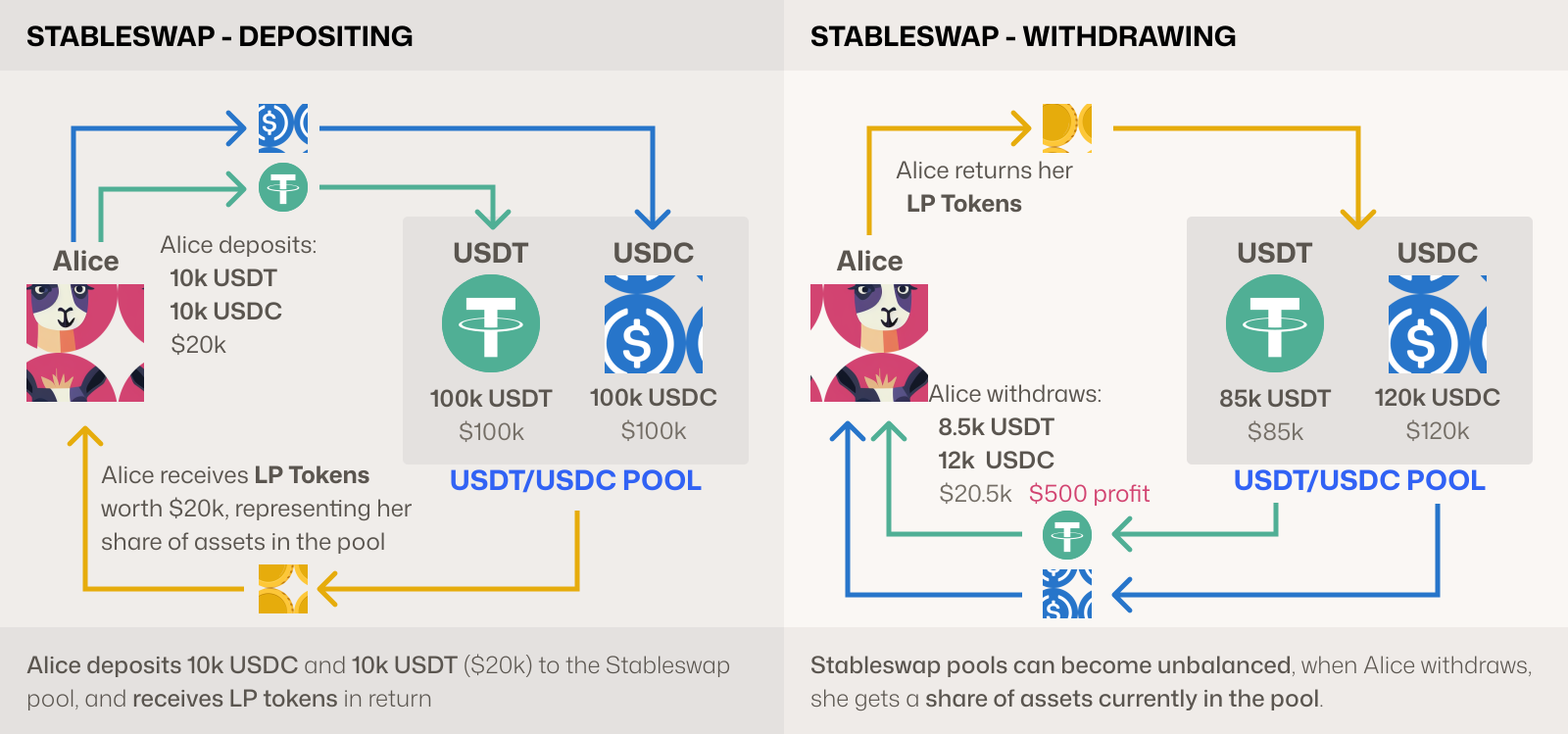
Identify pools with deep liquidity and consistent trading volume. High volume ensures steady fee accrual. Look for pairs like USDC/USDT or stablecoin wrappers on major chains. Official documentation from providers like Curve or PancakeSwap outlines specific pool metrics to evaluate before committing capital.
Connect your wallet to the hub interface and deposit your stablecoins in the required ratio. The protocol automatically rebalances the internal reserves as trades occur. Ensure you understand the pool's composition, as some metapools may include wrapped assets or complex underlying tokens.
Claim accrued fees and any additional token incentives distributed by the protocol. Regular harvesting compounds your returns and reduces exposure to potential token price volatility. Set up alerts or automate claims if the platform supports it to maximize yield efficiency.
Stablecoins can depeg temporarily. Monitor the peg health of underlying assets. If a deviation occurs, consider withdrawing to preserve capital or rebalancing to maintain optimal exposure. Risk management is critical in high-stakes DeFi environments.
The High Stakes of Stablecoin Liquidity
Institutional capital moves fast, and the margin for error in DeFi is virtually zero. When large volumes flow through a StableSwap Hub, the system is exposed to two distinct, compounding risks: smart contract vulnerabilities and asset de-pegging. Unlike traditional finance, where clearinghouses absorb shocks, DeFi protocols rely on code that must be flawless under extreme stress.
Smart Contract Exposure
Curve’s StableSwap invariant is designed to minimize slippage, but complexity introduces attack surfaces. As noted in Curve’s developer documentation, the specific algorithmic logic required to maintain pegs during high volatility creates unique failure modes if not rigorously audited [[src-serp-1]]. A single vulnerability in the liquidity pool contract can lead to total loss of collateral, a reality that institutional risk managers scrutinize heavily before deploying capital.
De-Pegging and Systemic Shock
Stablecoins are not risk-free. If the underlying asset loses its 1:1 parity, the arbitrage mechanism that keeps the pool balanced can fail, causing rapid liquidity drain. This is not theoretical; historical de-peg events have shown that even well-collateralized assets can experience temporary but severe price dislocations. In a high-stakes environment, these moments test the resilience of the entire hub, potentially triggering cascading liquidations across connected protocols.
Frequently asked questions about StableSwap
StableSwap Hubs operate differently than standard decentralized exchanges by using a specialized invariant algorithm. This design choice prioritizes price stability over the constant product formula, making them uniquely suited for large-volume institutional trading.
How does StableSwap differ from standard DEXs?
Standard DEXs like Uniswap often suffer from high slippage when trading assets with similar values. StableSwap uses a hybrid invariant that behaves like a constant product at large deviations but acts like a bonding curve near parity. This reduces slippage significantly for stablecoin swaps, as documented in the Curve StableSwap overview.
Is StableSwap suitable for institutional capital?
Yes. The low slippage and predictable pricing make it a preferred venue for institutional liquidity. It allows large players to move substantial capital without the market impact seen on traditional AMMs. The StableSwap-ng implementation further supports this by allowing up to 8 coins in plain pools, increasing depth and efficiency.
What assets can I swap on a StableSwap Hub?
These hubs primarily support stablecoins (like USDC, USDT, DAI) and pegged assets (like wstETH or rETH). The algorithm is optimized for assets that maintain a tight peg. While you can swap volatile tokens, the efficiency gains diminish as the price deviates from the peg.
No comments yet. Be the first to share your thoughts!