
Stableswap hub choices that change the plan
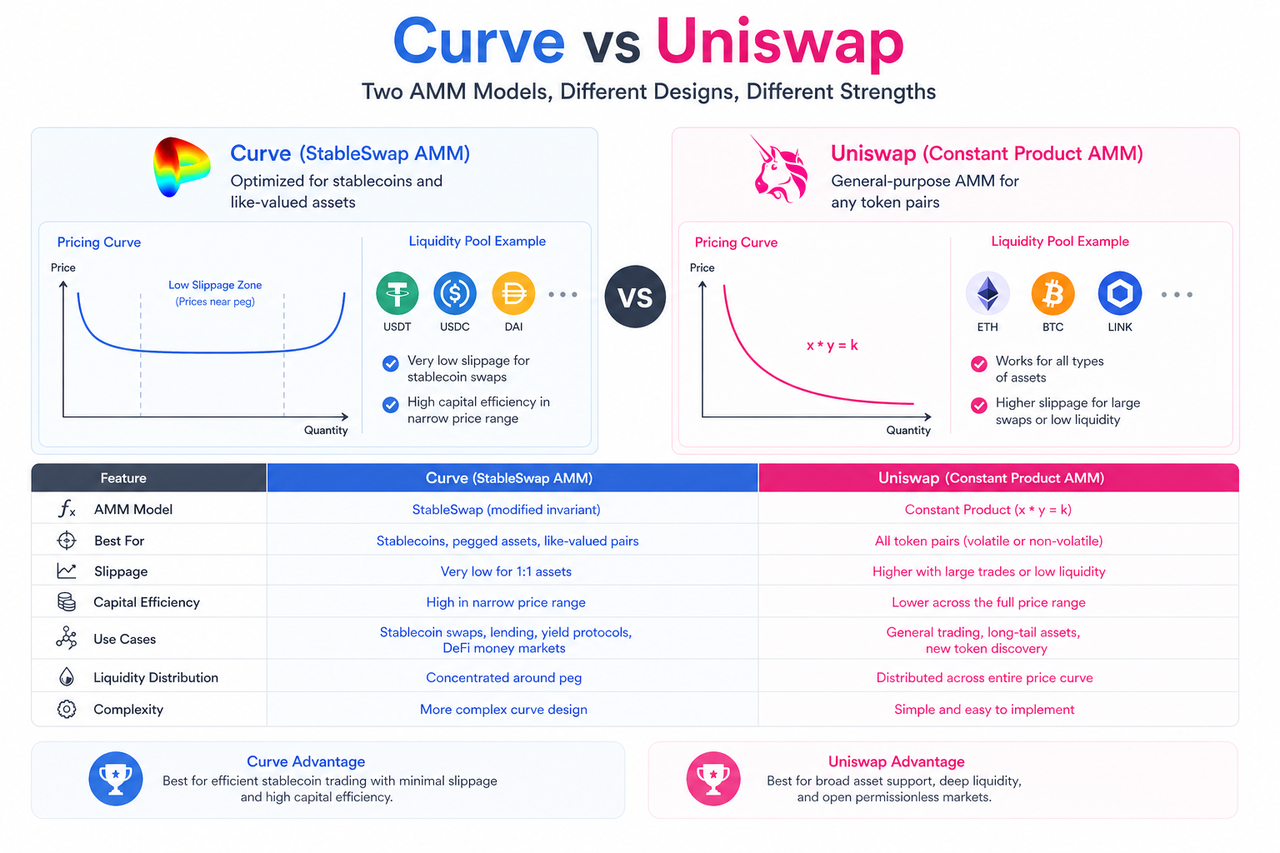
Choosing between a dedicated StableSwap hub like Curve and a broad DEX aggregator comes down to which variable matters most in your specific trade: execution cost or liquidity access. StableSwap hubs are specialized infrastructure designed to minimize slippage for assets with similar values, such as stablecoins. Aggregators, by contrast, are routing engines that scan multiple venues to find the best available price, regardless of the asset's volatility.
The tradeoff is not just about fees; it is about how liquidity is structured. StableSwap pools use a modified invariant that keeps trading costs low near the peg but penalizes large deviations. Aggregators do not hold liquidity themselves; they piece together fragments from various sources, including centralized exchanges and other DEXs. This means their performance depends on the depth of the broader market rather than a single concentrated pool.
To clarify where each approach wins, we compare the core mechanics and typical outcomes across standard use cases. The following table breaks down the differences in slippage behavior, fee structures, and asset support.
| Feature | StableSwap Hub | DEX Aggregator |
|---|---|---|
| Slippage | Near-zero for pegged assets; spikes sharply if value diverges | |
| Fee Structure | Low, fixed protocol fees (often <0.05%) | |
| Asset Support | Limited to stablecoins and pegged assets | |
| Liquidity Depth | Concentrated in specific pools | |
| Routing | Direct swap within the pool | |
| Aggregation | Splits orders across multiple venues | |
| Slippage | Varies based on combined depth of sources | |
| Fee Structure | Protocol fee + potential aggregator fee | |
| Asset Support | Any token with available liquidity | |
| Liquidity Depth | Sum of all connected venues | |
| Routing | Multi-hop or split execution |
When trading major stablecoins like USDC, USDT, or DAI, the StableSwap hub usually offers the best price. The specialized algorithm ensures that small trades incur almost no slippage, and large trades remain efficient as long as the peg holds. This makes it the preferred choice for treasury management, arbitrage, and high-frequency stablecoin swaps.
However, if you are trading volatile assets or need to swap between assets that do not share a peg, aggregators are more effective. They can route your trade through Uniswap, SushiSwap, or even centralized order books to find the deepest liquidity. While this might introduce slightly higher fees or gas costs due to multi-hop routing, it prevents the severe slippage you would face on a single pool.
The decision ultimately rests on your asset type. If your portfolio is heavily weighted toward stablecoins, the StableSwap hub’s efficiency is hard to beat. If your trades involve a mix of volatile assets, the aggregator’s ability to find the best price across the entire market is the superior tool.
Where StableSwap and DEX Aggregators Win
StableSwap and DEX aggregators serve different liquidity needs. StableSwap algorithms, like those powering Curve, are built for low slippage between assets of similar value. DEX aggregators, such as 1inch or Jupiter, route orders across multiple venues to find the best price for any token pair. Understanding which tool fits your trade prevents unnecessary fees and execution delays.
StableSwap: Best for Stablecoin Efficiency
StableSwap excels when trading assets pegged to the same value, such as USDC to USDT or ETH to wstETH. Its invariant algorithm reduces slippage significantly compared to standard constant-product AMMs. If you are moving large volumes between stablecoins, StableSwap offers the deepest liquidity and lowest trading costs.
This approach is ideal for treasury management, yield farming, or arbitrage between pegged assets. However, it performs poorly with volatile pairs. Trading a major token against a meme coin on a StableSwap pool will result in poor pricing because the algorithm assumes price stability. Stick to StableSwap only when both tokens in the pair are highly correlated.
DEX Aggregators: Best for Price Discovery
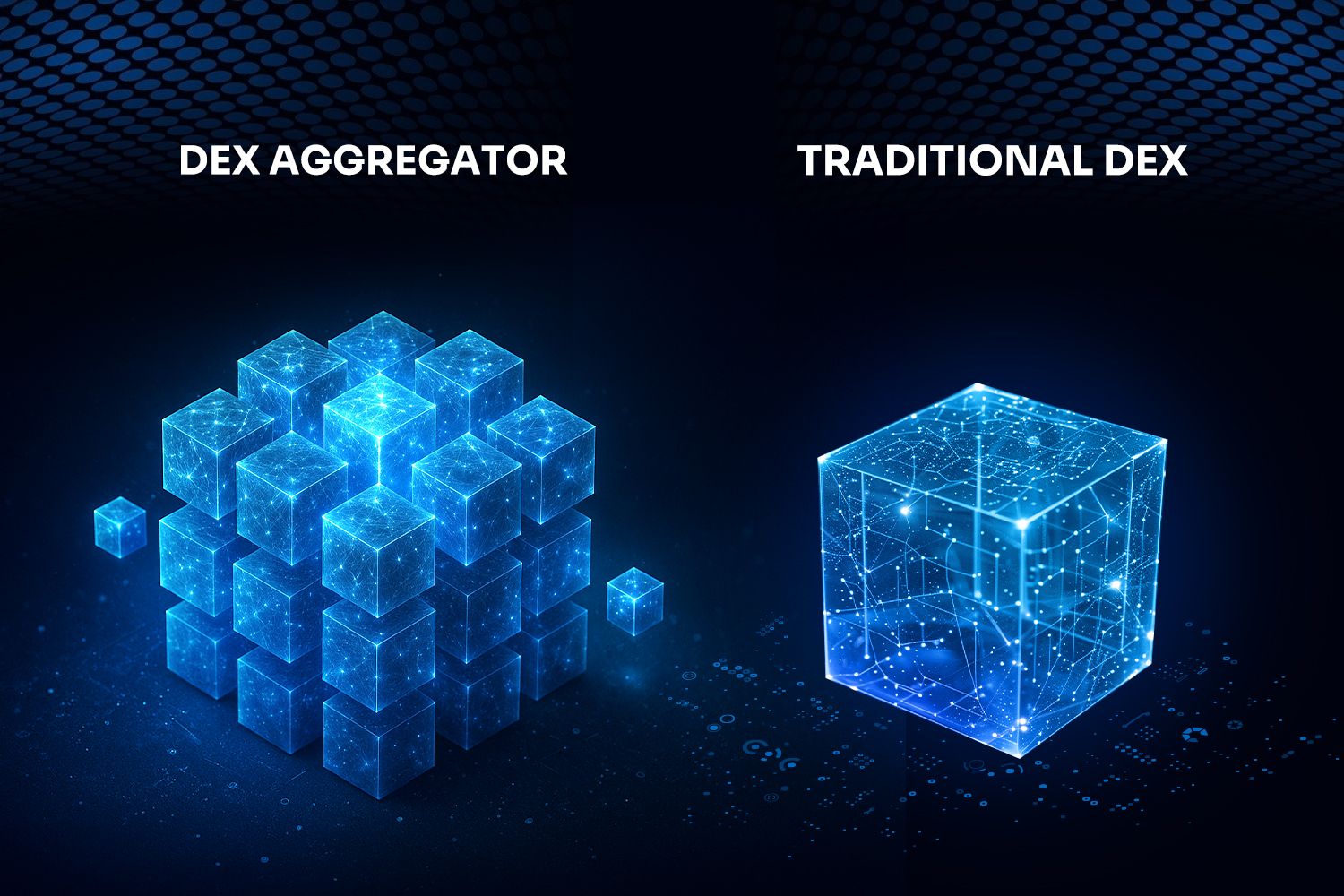
DEX aggregators shine when trading volatile assets or when no single pool offers sufficient liquidity. They split your order across multiple exchanges and AMMs, ensuring you receive the best possible execution price. This is critical for large trades or when swapping exotic token pairs where liquidity is fragmented.
Aggregators are the default choice for most retail traders and institutional desks moving capital between unrelated assets. While they may incur slightly higher gas fees due to complex routing, the improved price execution usually outweighs the cost. Use aggregators for any trade involving price-sensitive assets, new tokens, or when capital efficiency across the broader market is the priority.
| Feature | StableSwap | DEX Aggregator |
|---|---|---|
| Best For | Stablecoin-to-stablecoin | Any token pair |
| Slippage | Very Low | Variable (Best Price) |
| Liquidity Depth | Deep for Pegged Assets | Aggregated from Multiple Pools |
| Complexity | Simple Execution | Complex Routing |
Details worth checking
Before committing capital to either StableSwap pools or DEX aggregators, you need to verify the specific mechanics of the protocol you are using. Both approaches solve for capital efficiency, but they carry distinct risks that can impact your returns or security.
StableSwap protocols like Curve have strict limits on the number of assets per pool. Plain pools typically support up to 8 coins, while metapools are capped at 2. Ensure the pool you are targeting actually contains the assets you intend to swap, as exceeding these limits can break the invariant or prevent deployment entirely.
StableSwap algorithms are designed to minimize slippage for stable assets, but this efficiency drops sharply when assets diverge from their peg. DEX aggregators route through multiple liquidity sources, which can sometimes result in higher effective slippage for large orders. Calculate the potential price impact based on your specific trade size before executing.
When using DEX aggregators, you are often granting approval to a smart contract that routes your trade. Verify that the aggregator respects your approval limits and does not hold excessive permissions over your assets. For direct StableSwap interactions, review the specific pool contract’s governance controls and upgradeability clauses.

Not all StableSwap pools are deployed on every chain. Ensure the network you are trading on supports the specific StableSwap variant (such as StableSwap-NG) and that the aggregator you are using has liquidity routes for that specific chain. Cross-chain bridges add another layer of risk and cost that should be factored into your efficiency calculations.
Stableswap hub: what to check next
Before committing capital to StableSwap or aggregators, it helps to understand where each model actually shines. The choice isn't just about fees; it's about how price impact behaves when market conditions shift.
The decision ultimately comes down to the asset class. If you are managing a treasury of stablecoins, StableSwap's specialized invariant offers superior capital efficiency. For broader market exposure, aggregators provide the flexibility needed to navigate changing liquidity landscapes.
No comments yet. Be the first to share your thoughts!