
How stableswap pools work
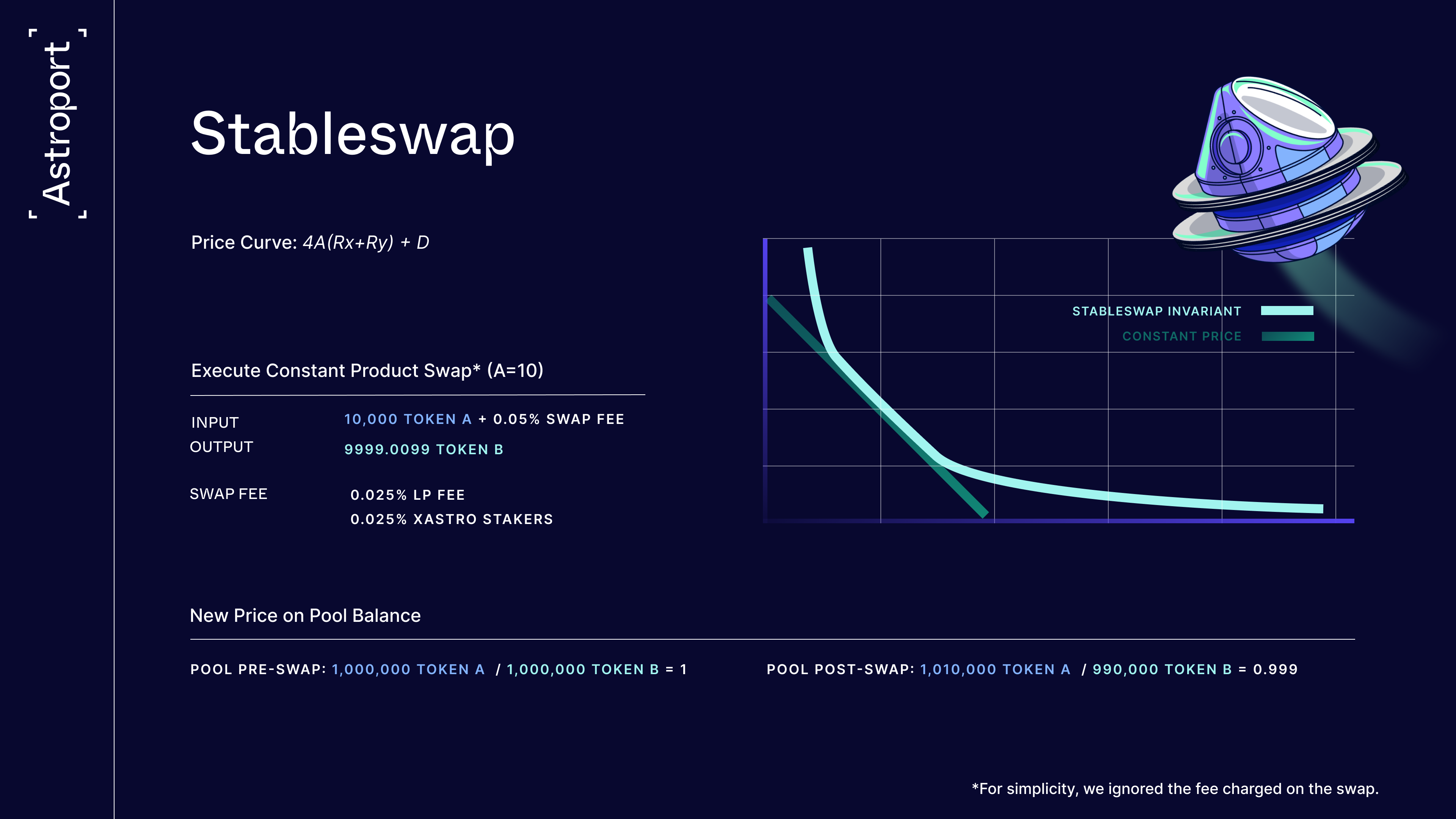
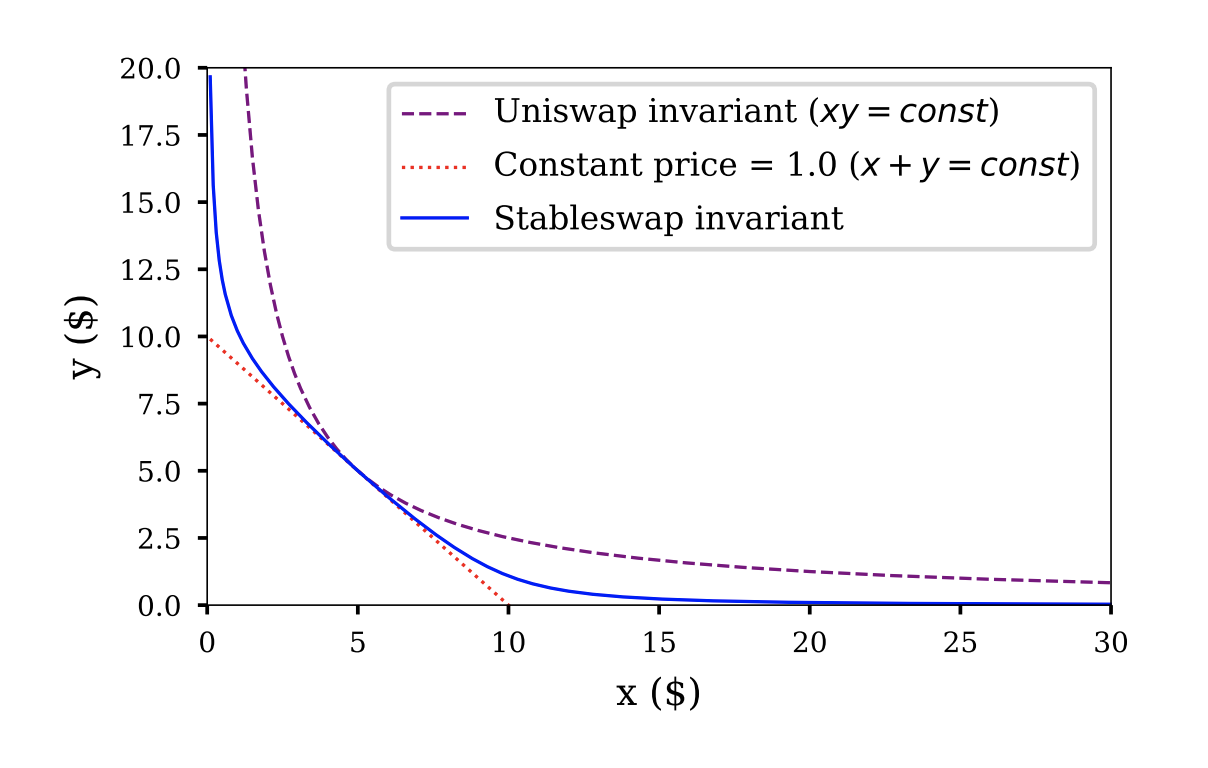
StableSwap pools solve a specific problem: standard automated market makers (AMMs) charge high fees and cause slippage when trading assets that should have the same value, like USDC and USDT. In a traditional Constant Product curve, the price changes sharply as soon as the ratio of tokens in the pool shifts. For stablecoins, this means you lose money on every swap due to volatility that doesn't actually exist in the underlying assets.
StableSwap 2026 protocols use a specialized mathematical curve that mimics a constant sum for small deviations from the peg. This keeps the exchange rate near 1:1 until the pool becomes imbalanced. The result is minimal slippage and lower trading fees for low-volatility pairs. This mechanism allows traders to move large volumes of stablecoins without moving the market price significantly.
Understanding this curve is essential for providing liquidity. When you deposit stablecoins into these pools, you are not betting on price appreciation. You are earning fees from the high volume of trades that benefit from the pool's efficiency. The pool's design ensures that arbitrageurs keep the tokens close to their peg, which maintains stability for all users.
How to provide liquidity to a stableswap pool
Providing liquidity to a stableswap pool is the engine behind the low-risk yields discussed in this guide. Unlike volatile pairs where you risk impermanent loss, stableswap pools pair assets pegged to the same value, such as USDC and USDT. Your job is simple: deposit these assets so traders can swap between them, and you earn a cut of the trading fees.
Think of the pool as a shared cash register. Every time a trader swaps one stablecoin for another, a small fee is added to the register. As a liquidity provider, you own a slice of that register, so you get paid proportionally. This is the core mechanic of stableswap 2026 strategies.
Follow these steps to get your assets into the pool and start earning.
Navigate to the official website of the stableswap protocol you have chosen. Look for the "Connect Wallet" button, typically located in the top-right corner. Select your preferred wallet provider (such as MetaMask, Phantom, or Coinbase Wallet) and approve the connection request. This action links your digital identity to the platform without transferring any funds yet.
Once connected, go to the "Pools" or "Markets" section. You will see a list of available trading pairs. For low-risk stableswap 2026 strategies, focus on pairs like USDC/USDT, USDC/DAI, or FRAX/USDC. Avoid pairs that include volatile assets like ETH or BTC unless you are specifically targeting higher yield with higher risk. Click on the pool that matches your available assets.
On the pool page, find the "Add Liquidity" or "Deposit" tab. Enter the amount of each stablecoin you wish to contribute. Most protocols require a 50/50 ratio by value to maintain the peg balance. For example, if you deposit $1,000 total, you might enter $500 worth of USDC and $500 worth of USDT. The interface will usually calculate the exact amounts for you to ensure you are depositing equal value.

Before you can deposit, you must grant the smart contract permission to move your tokens. Click "Approve" for each token you are depositing. This triggers a transaction in your wallet to authorize the pool. After approval, click "Deposit" or "Supply." This final transaction moves your stablecoins into the pool and issues you liquidity provider (LP) tokens in return, which represent your share of the pool.
After the transaction confirms, your LP tokens will appear in your wallet or on the protocol dashboard. These tokens are your receipt. You can stake them in a "Vault" or "Farm" on the same platform to earn additional rewards, or hold them to collect trading fees directly. Monitor the "APR" (Annual Percentage Rate) on the pool page to see how much you are earning in real-time.
Once your assets are deposited, the work is largely passive. The protocol handles the math, and the traders provide the volume. Your role is to monitor the health of the stablecoins in your chosen pool and ensure the peg remains stable. If a stablecoin loses its peg significantly, the pool mechanics may adjust, but for major stablecoins like USDC and USDT, this is rare.
Layer token incentives on trading fees
Liquidity mining in 2026 is not just about earning the spread from swaps. It is about stacking governance token rewards on top of those trading fees. This dual-income model is the primary engine for boosting APY in stableswap 2026 protocols.
When you provide liquidity, you are effectively lending your capital to the market. The protocol pays you a portion of the transaction fees generated by traders. This is the baseline yield. However, to significantly increase returns, you must look for pools that distribute additional governance tokens to liquidity providers. These tokens act as a bonus, effectively subsidizing your yield beyond the standard fee structure.
This strategy works because protocols need to attract deep liquidity to maintain tight spreads and low slippage. By offering extra tokens, they incentivize users to lock their capital in specific pairs. For a low-risk approach, focus on established stablecoin pairs like USDC/USDT or USDC/DAI. These pairs have high volume, meaning consistent fee generation, and lower impermanent loss risk compared to volatile assets.
To execute this, identify a reputable stableswap protocol that offers a liquidity mining program. Deposit your stablecoins into the designated pool. Monitor the emission rate of the governance tokens. If the token value remains stable or appreciates, your total yield will be the sum of the trading fees plus the value of the distributed tokens. This layered approach maximizes the utility of your stablecoins without exposing you to significant directional risk.
Manage impermanent loss risks
Impermanent loss is the primary fear for liquidity providers in decentralized finance, but it is largely a non-issue in StableSwap pools. Because the assets in these pairs—such as USDC and USDT—are pegged to the same fiat currency, their values move in lockstep. Even if one asset experiences a minor deviation, the peg mechanism ensures they remain nearly identical in value. This stability means you won’t suffer the typical percentage-based losses seen in volatile pairs like ETH/USDC.
The real risk in StableSwap 2026 is not impermanent loss, but de-pegging. If one of the stablecoins in your pool loses its $1.00 anchor, the pool will rebalance by selling the stronger asset and buying the weaker one. You end up holding more of the failing asset. This is why you must choose pools that mix highly regulated, fully reserved stablecoins rather than algorithmic or low-liquidity alternatives.
To protect your capital, keep your exposure diversified across multiple stablecoin pairs and monitor the reserve ratios of the protocols you use. A sudden drop in backing reserves is a clearer warning sign than price volatility. By sticking to established, transparent pools, you minimize the chance of holding a de-pegged asset during a market stress event.
Checklist for safe deployment
Before moving funds into a stableswap 2026 strategy, verify the pool’s technical health. A single oversight can expose capital to impermanent loss or protocol failure. Use this sequence to audit liquidity, security, and yield sustainability.
- Verify the underlying asset: Confirm the stablecoin is fully backed and pegged. Prefer established assets like USDC or USDT over unproven alternatives.
- Check liquidity depth: Ensure the pool has sufficient depth to absorb trades without significant slippage. Thin pools are vulnerable to manipulation.
- Audit the smart contract: Look for recent audits from reputable firms. Unaudited code is a high-risk vector for exploits.
- Review the fee structure: Understand how trading fees are distributed. Ensure the yield comes from real volume, not inflated incentives.
- Monitor impermanent loss: For non-pegged pairs, track the divergence between assets. Rebalance or withdraw if losses exceed expected yield.
Use this checklist as a pre-deployment gate. Skipping steps increases the risk of capital loss in the stableswap 2026 landscape.
FAQ: StableSwap 2026 and Stablecoin Safety
StableSwap 2026 relies on predictable liquidity. Understanding which stablecoins are currently trusted and how they function is essential for low-risk yield strategies.
No comments yet. Be the first to share your thoughts!