

In the high-stakes world of DeFi trading, slippage remains a silent killer for stablecoin swaps, quietly eroding profits even in low volatility pairs. Traders chasing zero slippage stablecoin AMMs now face a compelling showdown: the battle-tested Curve Finance versus the bold newcomer StabilizerFi. While Curve has long dominated with its minimal slippage for low volatility stable pairs, StabilizerFi promises to eliminate slippage entirely, redefining efficiency for constant sum AMM stables.
Curve Finance, with its CRV token trading at $0.2557 as of the latest data, continues to anchor stablecoin liquidity. This price reflects a modest 24-hour gain of and $0.001720, or and 0.006780%, hovering between a high of $0.2622 and low of $0.2520. Such stability underscores why Curve remains a go-to for minimal slippage Curve alternatives seekers, but does it hold up against StabilizerFi's radical claims?
Curve Finance: The Gold Standard for Low-Slippage Stable Swaps
Curve Finance redefined automated market making for stablecoins back in 2020, evolving from a niche player into DeFi's stablecoin powerhouse. Its proprietary StableSwap invariant concentrates liquidity tightly around pegged prices, like 1 USDC equaling 1 USDT, slashing slippage compared to standard AMMs that spread liquidity thin across wide price ranges.
The math is elegant: StableSwap blends a constant product formula with a constant sum mechanism, optimizing for assets of similar value. This hybrid approach delivers fees as low as 0.04% on major pools like the iconic 3pool (USDT, USDC, DAI), making it ideal for high-volume traders hedging positions or farming yields in volatile markets. Security-wise, Curve's battle-tested contracts have withstood billions in volume, with audits from top firms reinforcing trust.
Curve's primary use case is swapping stablecoins, where low slippage is essential to compete with centralized exchanges.
Yet, even Curve isn't immune to slippage. In larger trades or during brief depegs, that slippage ratio can creep up, taxing efficiency. Enter StabilizerFi, positioning itself as the ultimate StabilizerFi Curve Finance rival for low volatility stable pairs.


StabilizerFi Emerges: Zero Slippage Redefined
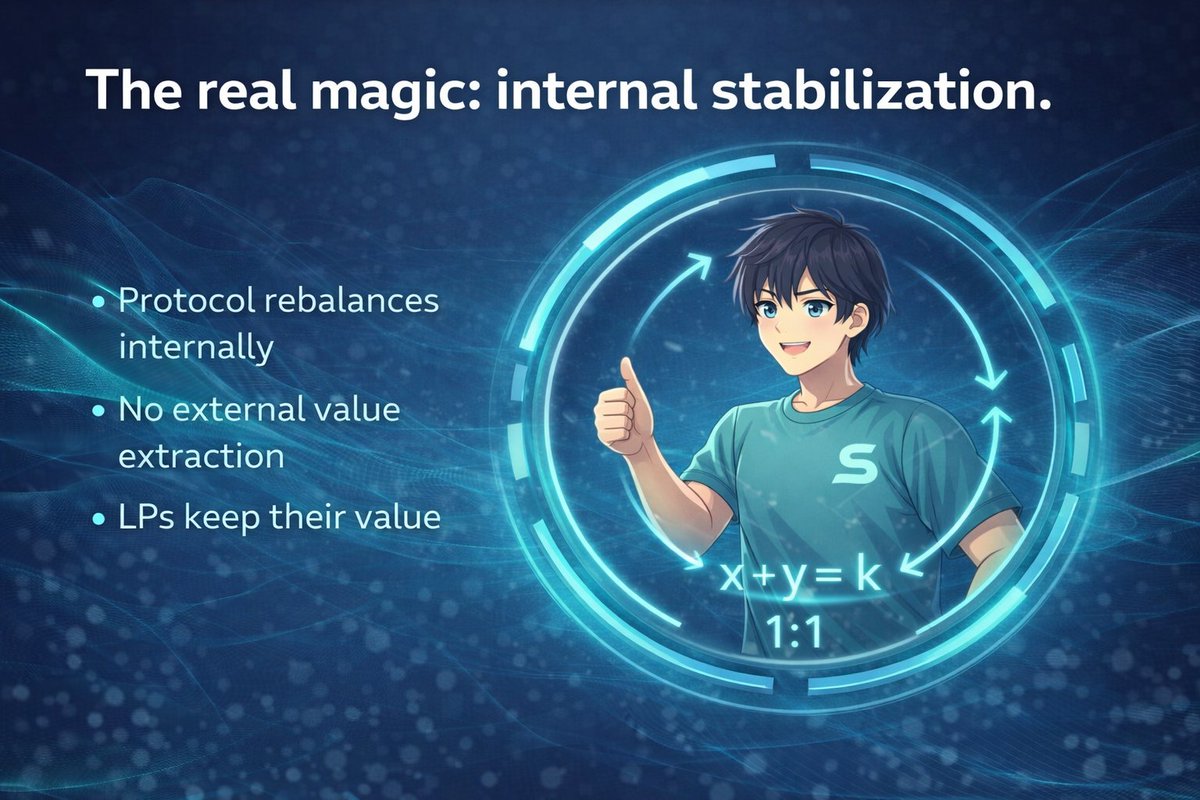
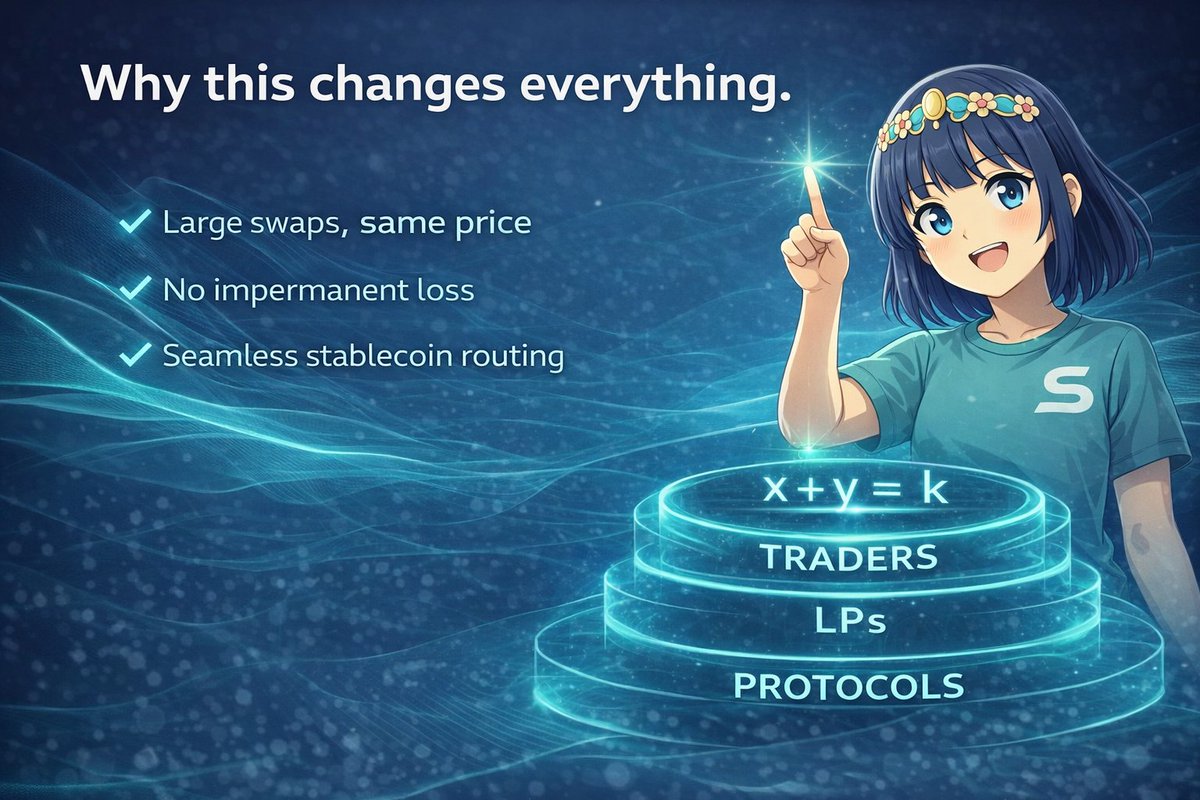
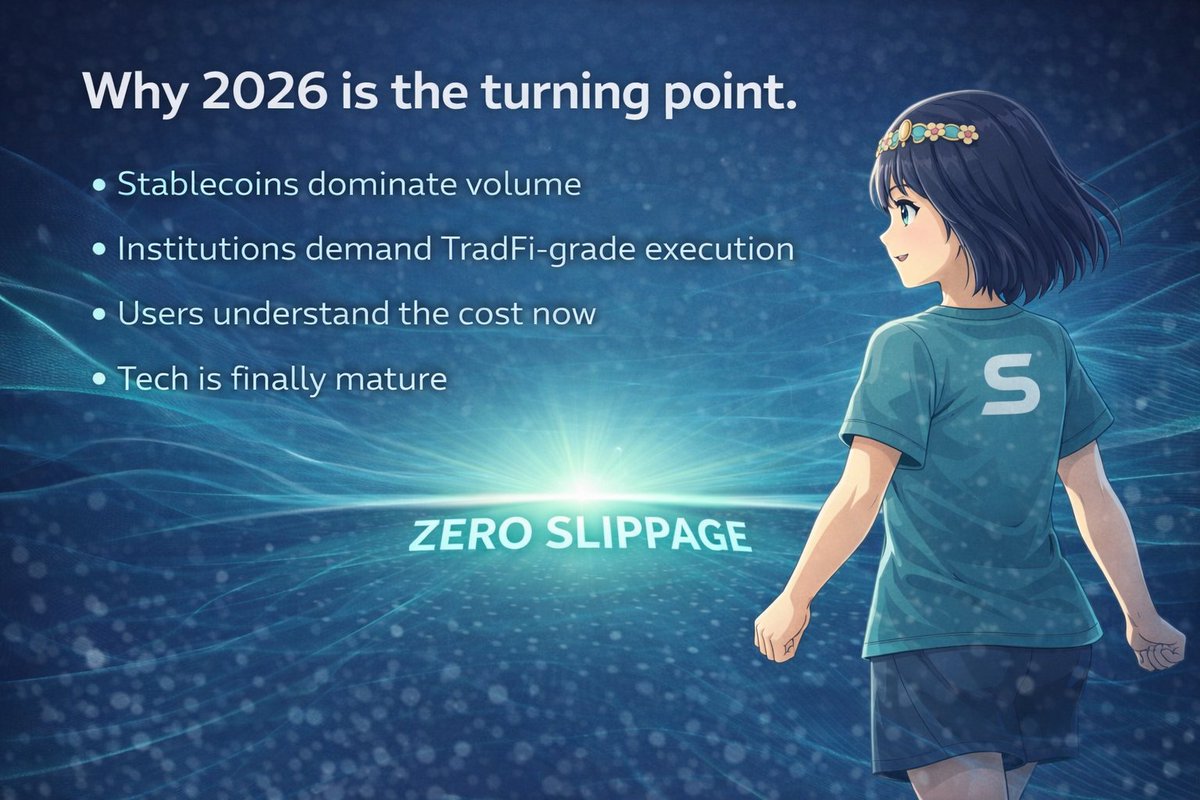
StabilizerFi bursts onto the scene with a provocative pitch: automated market making that erases slippage for stablecoin and pegged-asset trades. Unlike Curve's low-slippage optimization, StabilizerFi leverages advanced constant sum dynamics, purportedly ensuring trades execute at exact peg rates regardless of size. This could transform zero slippage stablecoin AMM trading, especially for yield farmers juggling DAI-USDC pairs without efficiency leaks.
Details on StabilizerFi remain emerging, but early signals point to a design tailored for peg stability. Imagine pools where liquidity is hyper-concentrated, using oracle feeds or collateral mechanisms to enforce 1: 1 swaps. For low volatility stable pairs, this means no more watching small imbalances inflate costs, a pain point Curve mitigates but doesn't fully solve.
Balancing hype with reality, StabilizerFi's unproven track record contrasts Curve's maturity. CRV at $0.2557 benefits from network effects, deep integrations, and veCRV locking for boosted yields. StabilizerFi must prove liquidity depth and security to challenge that.
Curve DAO Token (CRV) Price Prediction 2027-2032
Forecast from current $0.2557 level (Feb 2026), factoring DeFi stablecoin trends, market cycles, and competition
| Year | Minimum Price | Average Price | Maximum Price | YoY % Change (Avg from Prev) |
|---|---|---|---|---|
| 2027 | $0.25 | $0.45 | $0.85 | +73% |
| 2028 | $0.40 | $1.10 | $2.50 | +144% |
| 2029 | $0.70 | $2.20 | $5.00 | +100% |
| 2030 | $0.90 | $1.60 | $2.80 | -27% |
| 2031 | $1.10 | $2.40 | $5.50 | +50% |
| 2032 | $1.50 | $3.80 | $8.50 | +58% |
Price Prediction Summary
CRV is forecasted to see progressive growth, with average prices climbing from $0.45 in 2027 to $3.80 by 2032, driven by Curve Finance's dominance in low-slippage stablecoin trading. Bullish peaks align with market cycles (e.g., 2028 halving), while mins reflect bearish corrections; maxes assume strong DeFi adoption.
Key Factors Affecting Curve DAO Token Price
- Curve's StableSwap algorithm and deep stablecoin liquidity driving trading volume
- Bitcoin halving cycles (2028, 2032) amplifying DeFi bull runs
- Regulatory clarity enhancing DeFi accessibility
- Technological upgrades minimizing slippage vs competitors like StabilizerFi
- Overall crypto market cap expansion and institutional inflows
- Macro risks including economic downturns and competition in AMMs
Disclaimer: Cryptocurrency price predictions are speculative and based on current market analysis. Actual prices may vary significantly due to market volatility, regulatory changes, and other factors. Always do your own research before making investment decisions.
Head-to-Head: Mechanics and Efficiency in Low Volatility Pairs[/h2>
Dissecting the engines: Curve's StableSwap invariant uses an amplification factor (A) to tighten the bonding curve around equilibrium. Higher A values mean less slippage for trades near peg, perfect for stablecoin swaps. Pools like 3pool exemplify this, powering DeFi with reliable liquidity.
StabilizerFi, by contrast, aims for pure constant sum AMMs, where swaps are arithmetic rather than geometric. This theoretically yields zero slippage within peg bounds, ideal for constant sum AMM stables. But implementation matters: without Curve's hybrid flexibility, StabilizerFi risks vulnerability during extreme depegs, where constant sum fails harder than product curves.
Empirical data backs Curve's edge in real-world conditions. Its 3pool, for instance, routinely handles multimillion-dollar swaps with slippage under 0.01%, far below Uniswap's 0.3% for similar volumes. StabilizerFi's constant sum promise shines in theory for low volatility stable pairs, but without audited pools or TVL benchmarks, traders must weigh untested purity against proven resilience.
Yield Farming: Rewards in the Zero Slippage Arena
Where the rubber meets the road for yield farmers is incentives. Curve's veCRV model locks governance power for amplified rewards, drawing billions in TVL. At CRV's current $0.2557 price, a 24-hour uptick of $0.001720 signals quiet confidence amid market chop. Locking veCRV boosts APYs in pools like DAI-USDC, often hitting 5-10% with CRV emissions, plus partner bribes from protocols like Convex.
StabilizerFi teases superior yields through slippage-free compounding, potentially letting farmers retain every basis point. Picture reinvesting swaps without drag, stacking rewards in constant sum AMM stables. Yet, absent tokenomics details, it lacks Curve's flywheel of liquidity mining and gauges, where top pools command outsized shares. For balanced strategies, I blend Curve's depth with emerging plays, hedging via 3pool while scouting StabilizerFi pilots.
Risks, Security, and the Path Forward
Security tilts heavily toward Curve. Years of audits, immutable contracts, and exploits weathered (like the 2023 Vyper incident, swiftly patched) cement its status. StabilizerFi, as a fresh entrant, carries smart contract roulette risks, plus oracle dependencies that could falter in black swan depegs. Low volatility pairs thrive on trust; Curve's track record, powering DeFi composability, edges out novelty.
That said, StabilizerFi's zero slippage vision empowers traders tired of Curve's micro-fees adding up. In a maturing DeFi, hybrid approaches win: use Curve for scale, StabilizerFi for precision nibbles. With CRV steady at $0.2557 between $0.2520 and $0.2622, liquidity providers sleep easier knowing fundamentals hold.
For minimal slippage Curve alternatives, monitor StabilizerFi's testnets closely. Its pure constant sum could disrupt if liquidity ignites, but Curve's ecosystem moat - integrations with Yearn, Convex, and beyond - keeps it indispensable. Yield farmers, optimize ruthlessly: gauge APYs, lock veCRV wisely, and swap slippage-free where possible.

No comments yet. Be the first to share your thoughts!