
In the volatile world of DeFi, hedging positions with low vol stable AMMs like Curve Finance's StableSwap offers a disciplined path to stability. Traders and yield farmers often overlook these pools, yet they excel at minimizing slippage in low vol stablecoin pairs such as USDC-USDT or DAI-USDC. By leveraging the hybrid invariant that blends constant sum and constant product dynamics, these mechanisms concentrate liquidity near the peg, enabling large swaps without punishing price impacts. This guide dissects Curve Stableswap hedging tactics, drawing on proven mechanics for risk-adjusted returns.
StableSwap Invariant: The Core of Low-Slippage Efficiency
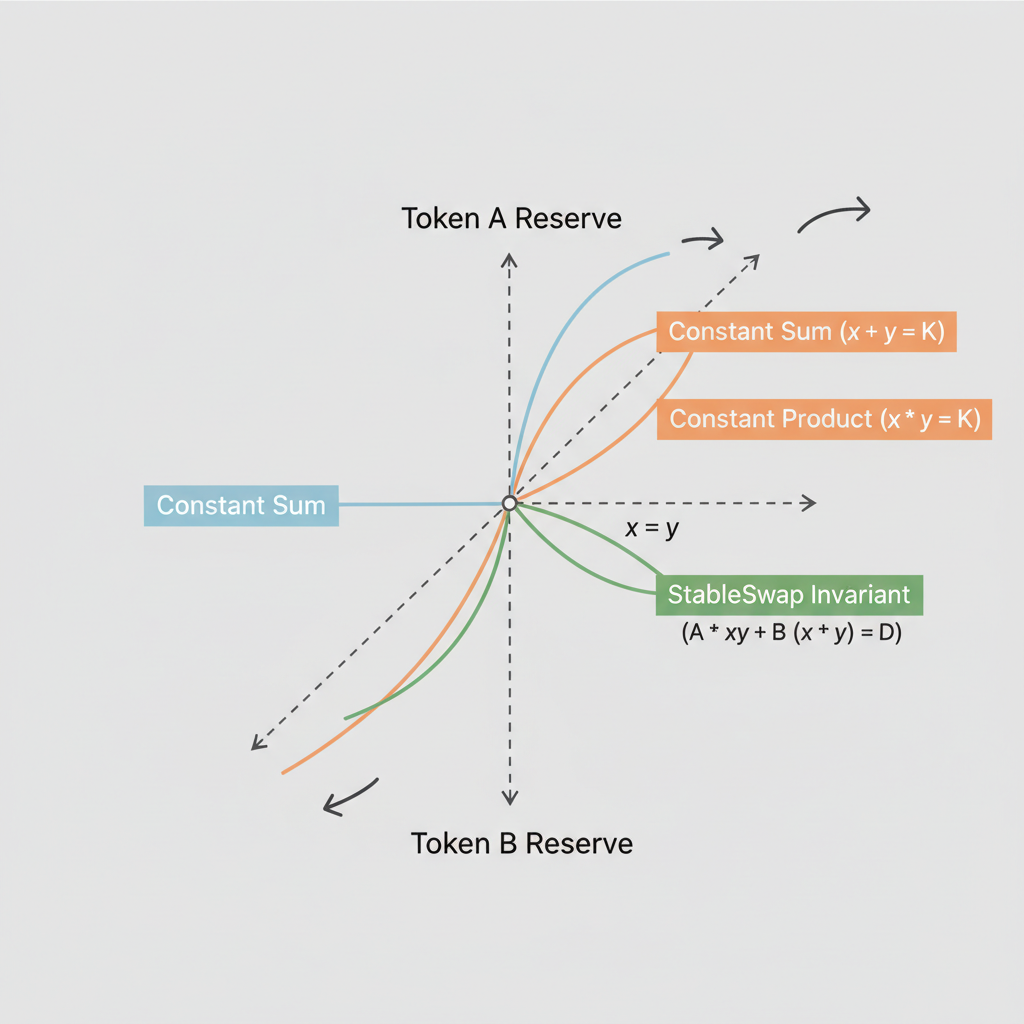
Curve's StableSwap algorithm stands apart from Uniswap-style constant product curves. It employs a sophisticated invariant, D, that transitions seamlessly from constant sum behavior near the 1: 1 peg to constant product at extremes. This hybrid approach, as detailed in foundational whitepapers, acts like a constant sum market maker for pegged assets, ensuring minimal slippage even on multimillion-dollar trades. For instance, swapping $10 million USDC for USDT incurs fractions of a percent in price deviation, far below traditional AMMs.
The math hinges on an amplification factor, A, which controls liquidity concentration. Higher A values tighten the curve around equilibrium, ideal for stablecoin AMMs. Rescaling in StableSwap-NG further aligns prices dynamically, but demands careful parameter tuning to avoid imbalances. Conservative providers prioritize pools with battle-tested parameters, shunning experimental forks prone to exploits.
StableSwap provides a mechanism to create cross-markets for stablecoins in a way which could be called “Uniswap with leverage” - University of California, Berkeley.
Building Hedging Positions in Curve Pools
Hedging stable AMMs begins with liquidity provision in pegged pairs. Deposit equal values of USDC and USDT into a Curve pool; the StableSwap curve shields against impermanent loss by design. Fees accrue steadily, often 0.04% per swap, compounding into attractive APYs during high-volume periods. Unlike volatile pairs, where divergence losses erode gains, these pools deliver predictable income, perfect for offsetting leveraged long positions elsewhere.
Consider a portfolio with BTC longs: allocate 20% to a 3pool (USDC/USDT/DAI). As BTC fluctuates, stable fees provide ballast. Diversify further into satellite pools like crvUSD-USDC for boosted yields via Convex veCRV boosts. Active managers rotate based on gauge weights, but conservatives stick to core pools audited over years.
- Target pools with TVL over $100M for depth.
- Monitor A-factor; values 100-500 suit most hedging.
- Pair with lending protocols for dual yields.
Market Snapshot: CRV at $0.2846 Amid Subdued Action
Curve DAO Token (CRV) trades at $0.2846, down 0.8690% over 24 hours from a high of $0.2886 and low of $0.2681. This modest dip reflects broader stableswap ecosystem steadiness, with liquidity rotating toward high-incentive pools. CRV's utility in voting for emissions underscores its role in hedging strategies, locking for veCRV amplifies LP rewards without selling exposure.
Low volatility here signals opportunity: as DeFi TVL rebounds, CRV could capture outsized gains from stablecoin inflows. Yet, conservative positioning favors gradual accumulation below $0.30, hedging via pool deposits over spot buys.
Curve DAO Token (CRV) Price Prediction 2027-2032
Forecast based on short-term bearish outlook to $0.27, medium-term rebound to $0.35 from TVL growth, and long-term DeFi adoption trends amid stable AMM innovations
| Year | Minimum Price | Average Price | Maximum Price | YoY % Change (Avg from 2026 $0.28) |
|---|---|---|---|---|
| 2027 | $0.25 | $0.32 | $0.40 | +14% |
| 2028 | $0.30 | $0.45 | $0.65 | +41% |
| 2029 | $0.40 | $0.65 | $1.00 | +44% |
| 2030 | $0.55 | $0.95 | $1.50 | +46% |
| 2031 | $0.80 | $1.40 | $2.20 | +47% |
| 2032 | $1.10 | $2.00 | $3.20 | +43% |
Price Prediction Summary
CRV faces short-term bearish pressure dipping to $0.25 minimum in 2027, but medium-term rebound to $0.35+ driven by TVL expansion and StableSwap efficiency. Long-term bullish outlook to $2 average by 2032 in adoption scenarios, with min/max reflecting bearish regulatory risks and bullish DeFi growth.
Key Factors Affecting Curve DAO Token Price
- TVL growth in Curve stablecoin pools and StableSwap usage
- Increasing stablecoin adoption and low-slippage AMM demand
- Regulatory clarity on DeFi and stablecoins boosting confidence
- Technological upgrades to Curve protocol reducing risks
- Market cycles, Bitcoin halving effects, and competition from Uniswap V3/other AMMs
- Hedging strategies enhancing liquidity provider incentives
Disclaimer: Cryptocurrency price predictions are speculative and based on current market analysis. Actual prices may vary significantly due to market volatility, regulatory changes, and other factors. Always do your own research before making investment decisions.
Impermanent loss remains negligible in true peg pairs, but depegging events, like past UST, highlight the need for vigilant monitoring. Stick to tier-1 stables from Circle or Tether, audited relentlessly.
Providers who ignore these signals risk amplified losses during flash depegs, underscoring my preference for overcollateralized, transparent issuers. Pair this vigilance with automated alerts for peg deviations beyond 0.5%, ensuring timely withdrawals from stressed pools.
Practical Implementation: Step-by-Step Hedging Setup
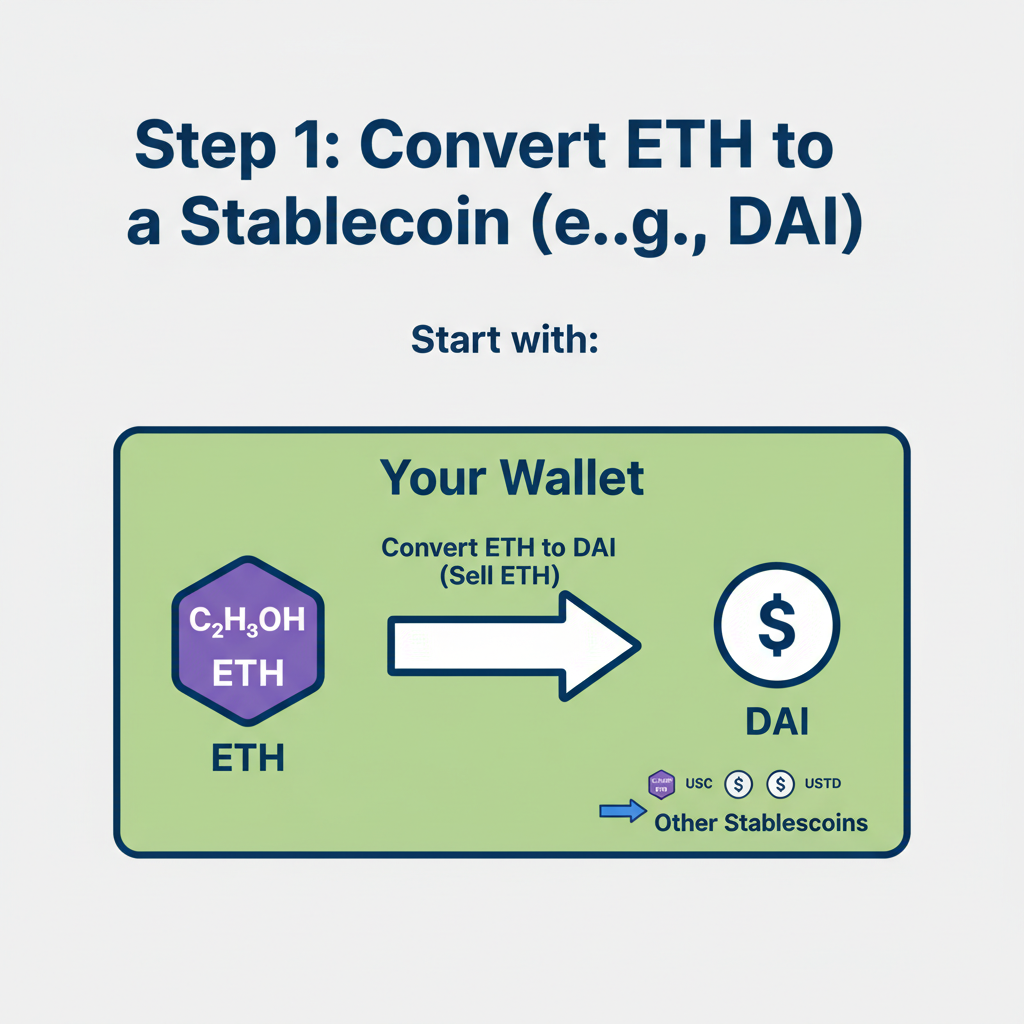
Executing Curve Stableswap hedging demands precision. Begin by assessing your exposure: if holding volatile longs like ETH, counter with 10-30% allocation to stable pools. Use wallets like MetaMask connected to Curve's frontend; deposit balanced ratios into 3pool or similar. Lock CRV for veCRV if chasing gauges, but limit to 20% of stake to avoid opportunity cost at current $0.2846 levels.
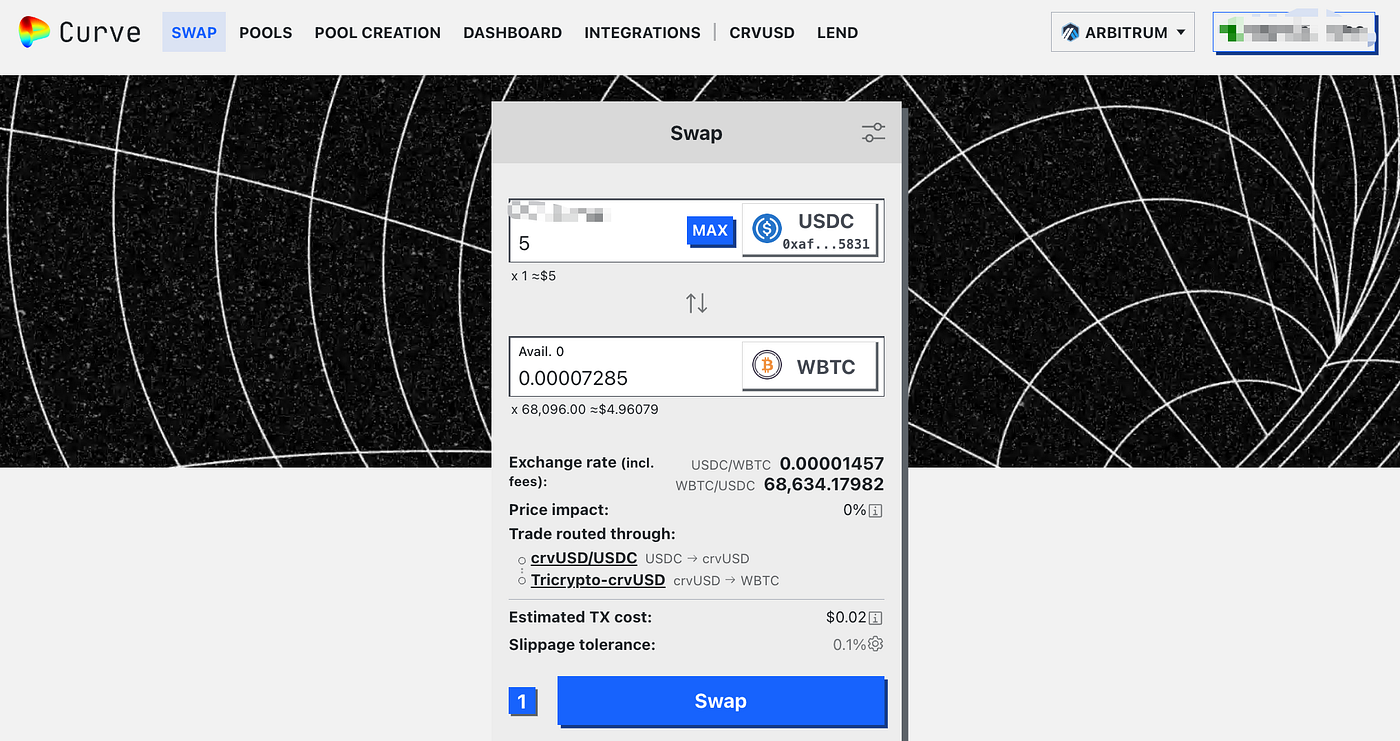
- Scan pools via DefiLlama for TVL, volume, and APY; prioritize those exceeding 5% risk-adjusted yield.
- Simulate deposits using Curve's calculator to forecast fees versus IL.
- Stake LP tokens in Convex for boosts, but hedge CRV exposure with short-dated options if available.
- Rebalance quarterly or post major depegs, withdrawing to cold storage.
This framework has served me across cycles, yielding 4-12% APY with drawdowns under 2%. In today's subdued market, with CRV dipping to a 24-hour low of $0.2681, such positions anchor portfolios against broader crypto swings.
Advanced Tactics for Yield Optimization
Beyond basics, layer in crvUSD lending: borrow against stable LP positions at sub-2% rates, redeploy into higher-fee pools. This leverages StableSwap's efficiency without equity risk. For low vol stablecoin pairs, experiment with tricrypto-ng pools edged toward stables, but cap at 10% portfolio weight given residual volatility.
Concentrated liquidity variants, inspired by Curve, demand narrower ranges; a 0.999-1.001 band around peg maximizes fees but amplifies rebalancing needs. My conservative stance favors full-range provision in core pools, trading minor efficiency for set-it-and-forget-it reliability. With CRV at $0.2846 and 24-hour change of -0.8690%, emissions favor established pools, rewarding patient LPs.
Curve StableSwap: Invariant Math, Slippage Calc & Hedging Mastery
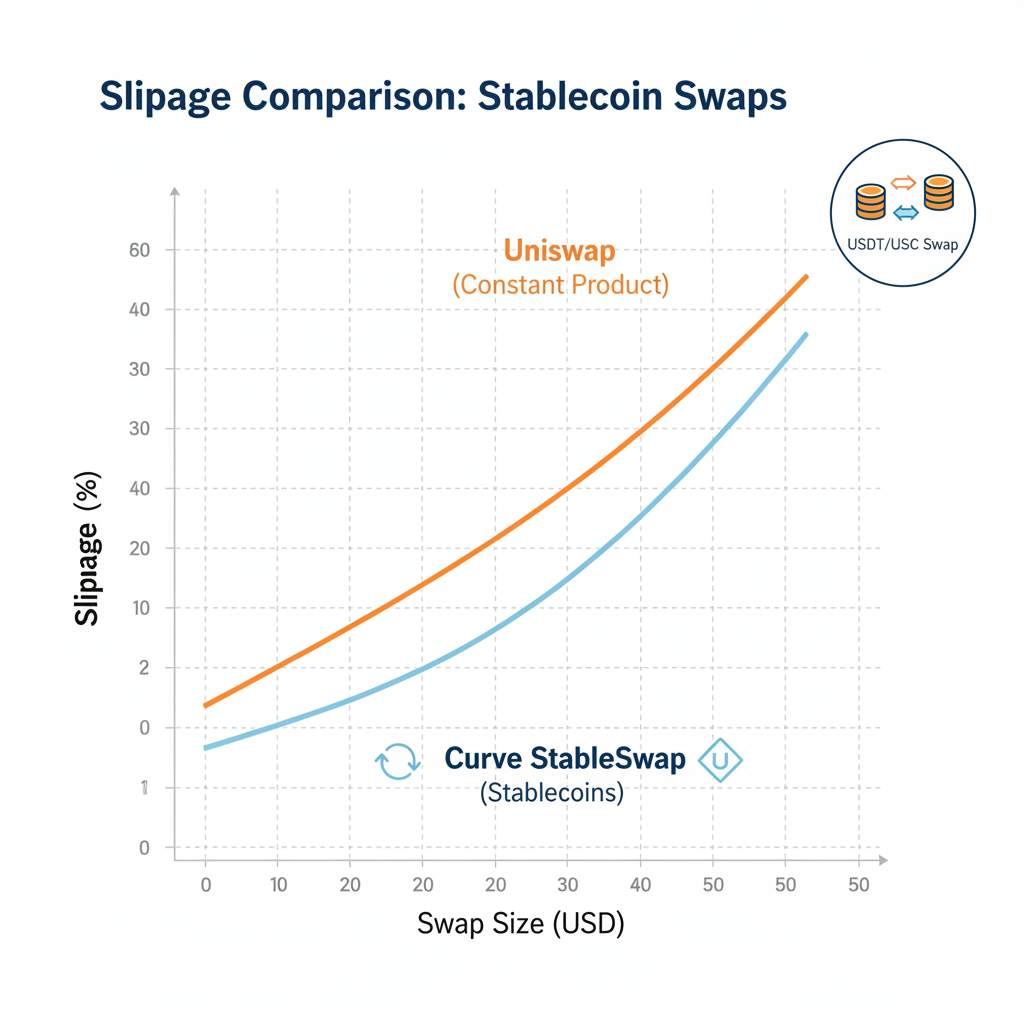
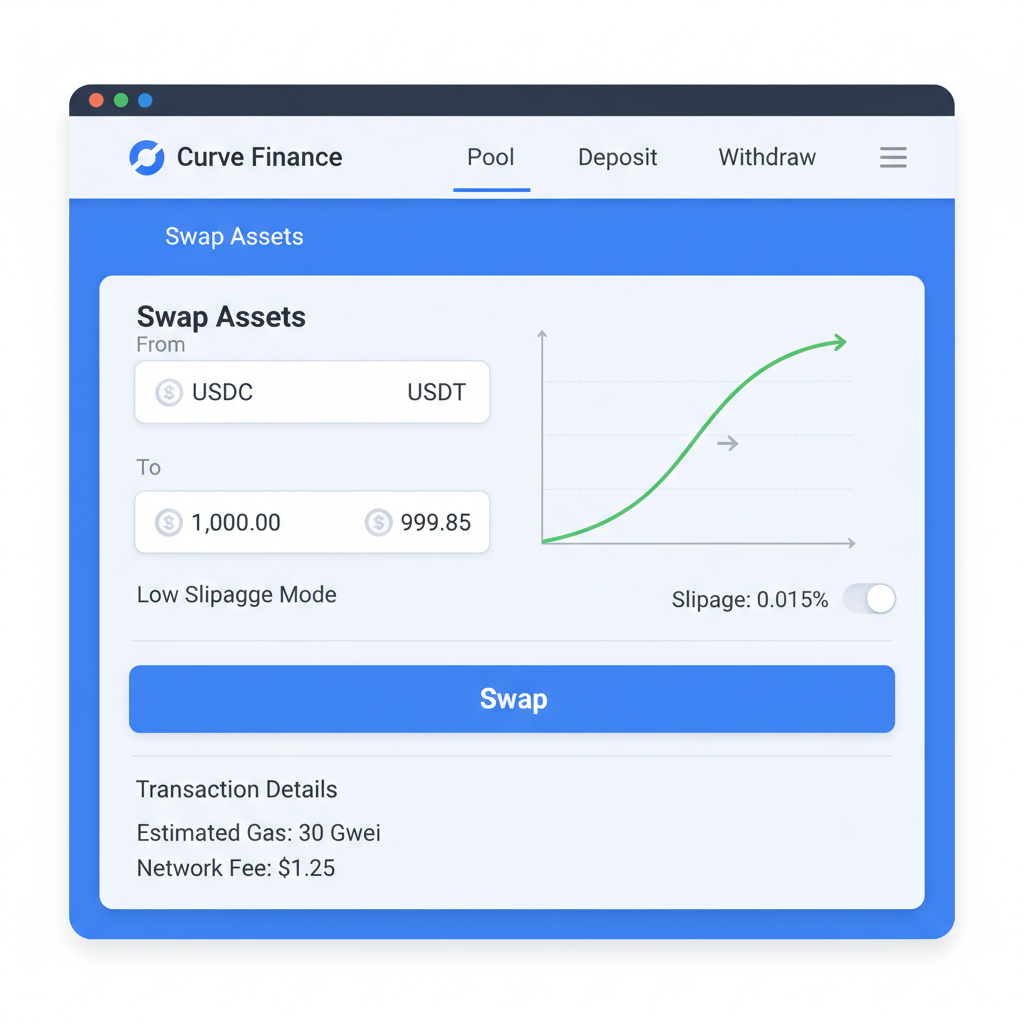
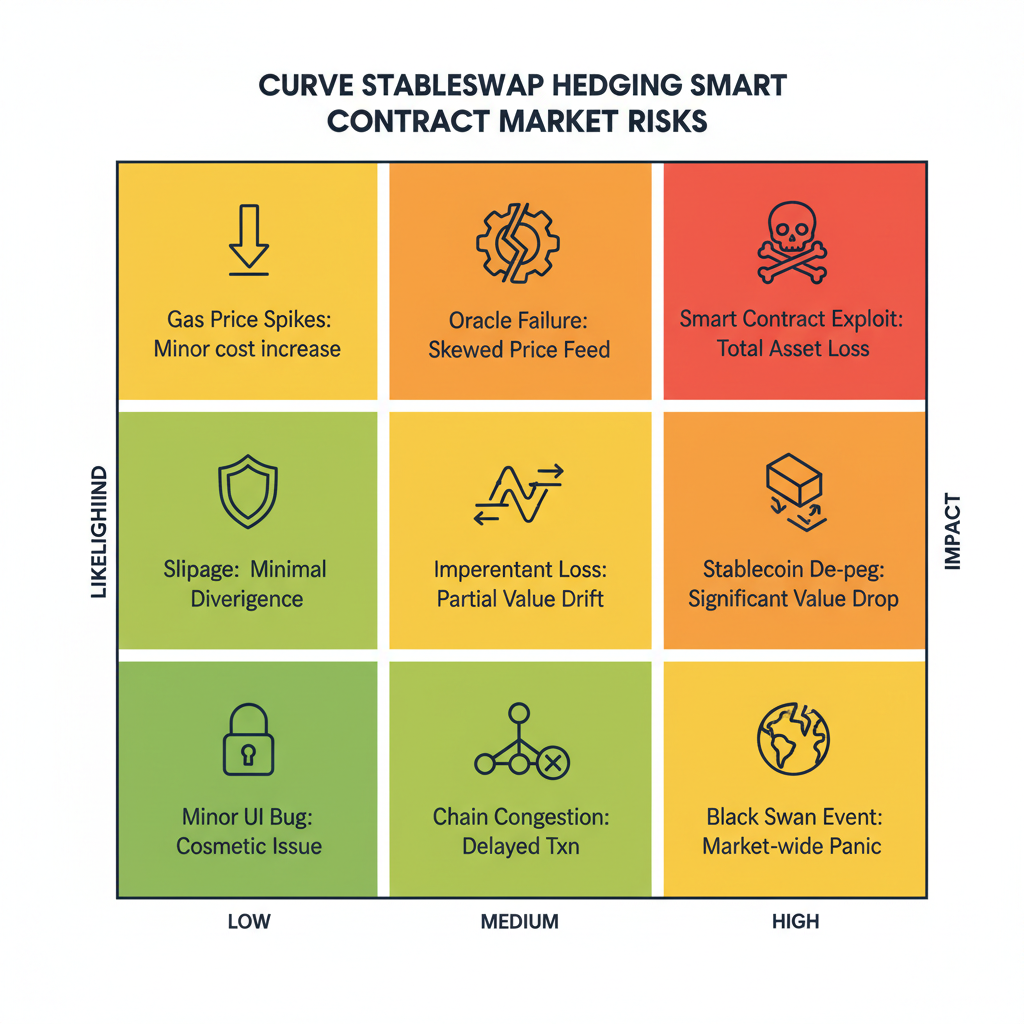
Opinionated take: shun hype-driven forks; Curve's battle scars confer unmatched resilience. Data from high-volume days shows slippage under 0.01% on $50M trades, a boon for institutional hedging.
In practice, blend these with off-chain hedges like T-bills via tokenized yields, creating a fortress against DeFi's tempests. CRV's steady $0.2846 price amid volatility affirms stableswap's enduring edge, positioning diligent hedgers for compounded gains as liquidity returns.
Mastering these pools transforms hedging from defensive chore to yield engine, all while sleeping soundly through market noise.


No comments yet. Be the first to share your thoughts!